A toilet that keeps running, or refills on its own every so often, is more than an annoying sound. It can waste up to 200 gallons of water a day, and you'll see it on your water bill. Most of the time the fix is a cheap part and a few minutes of work. Here's how to find the cause.
How a Toilet Tank Works
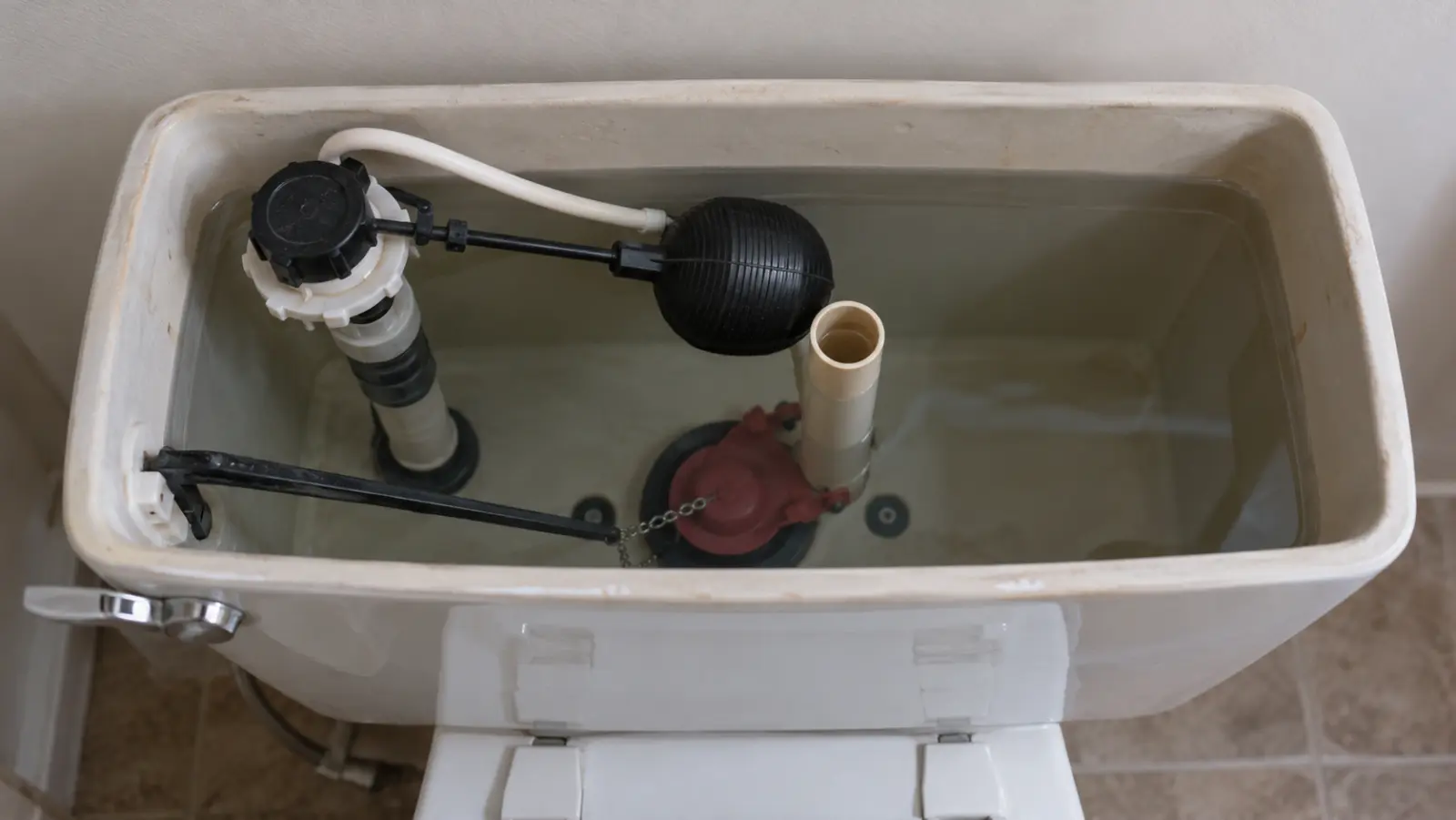
Take the lid off the tank and set it somewhere safe, since it's heavy and breaks easily. Inside you'll see:
- The flapper: a rubber seal at the bottom of the tank. It lifts when you flush and drops to seal the tank again.
- The chain: connects the flush handle to the flapper.
- The fill valve: the tall assembly on one side that refills the tank, with a float that tells it when to stop.
- The overflow tube: the open pipe in the middle that keeps the tank from overflowing.
A running toilet almost always comes down to one of these.
Step 1: Is Water Going Into the Overflow Tube?
Look at the water level. If it's at or above the top of the overflow tube and water is spilling into it, the fill valve isn't shutting off.
The fix: lower the float. Most modern fill valves have a float cup that slides on the shaft, adjusted with a clip or a screw. Older ones have a ball on a metal arm that you can bend down slightly. Set it so the water stops about an inch below the top of the overflow tube. If the valve keeps running no matter where the float is, the fill valve is worn out and needs replacing.
Step 2: Is the Flapper Leaking?
If the water level is fine but the toilet still refills on its own every so often, called a "phantom flush," water is leaking past the flapper into the bowl.
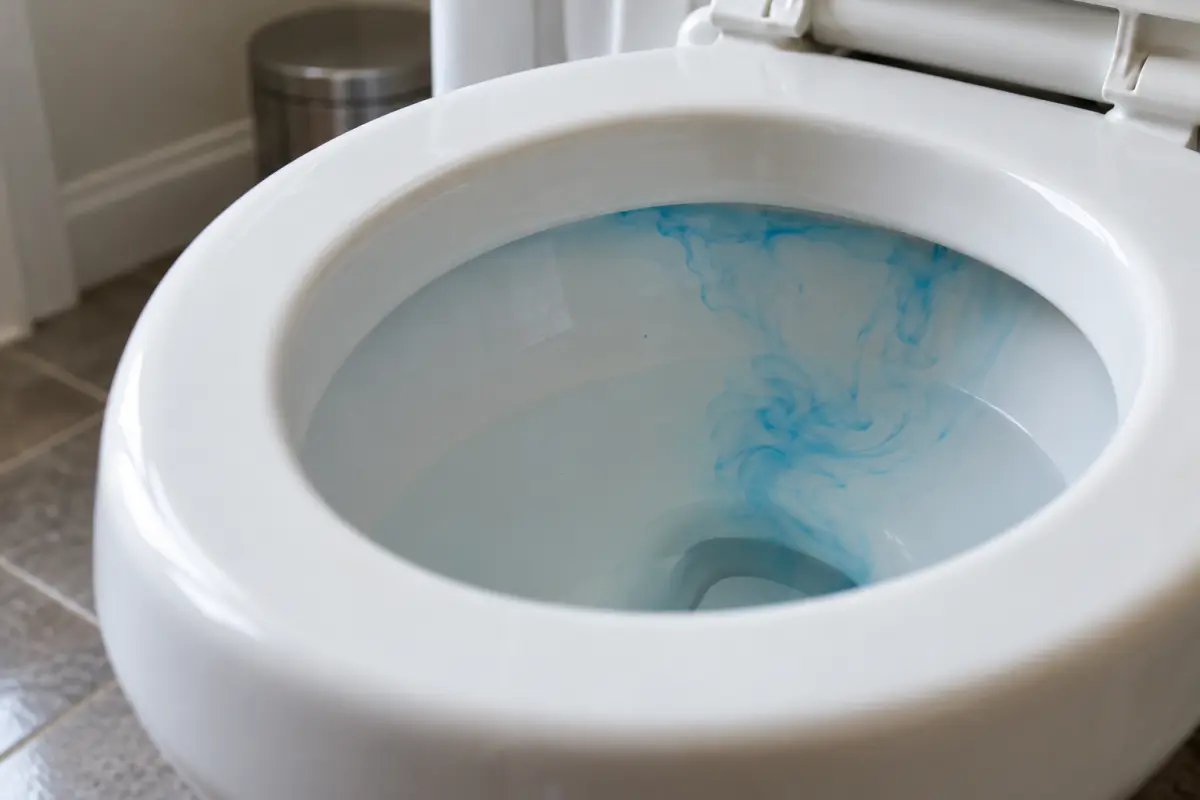
The dye test: put a few drops of food coloring in the tank and don't flush for 15 to 30 minutes. If color shows up in the bowl, the flapper isn't sealing.
The fix: first, check that the flapper is sitting flat and the chain isn't caught under it. Then feel the flapper. If it's stiff, warped or slimy, replace it. Flappers are inexpensive, but they come in 2-inch and 3-inch sizes, so check your toilet or bring the old one to the store. In Tampa Bay's hard water, the chlorine and minerals wear flappers out faster than you'd expect.
Step 3: Check the Chain and Handle
A chain that's too short holds the flapper open slightly. A chain that's too long can get trapped under it. You want a little slack, about half an inch, when the flapper is closed. If the handle sticks in the down position, the handle or its arm may need adjusting or replacing.
When to Call a Plumber
- The tank or bowl is cracked
- Water is pooling at the base of the toilet, which usually means a failed wax ring. Left alone, it can rot the subfloor.
- The shut-off valve behind the toilet won't turn or leaks
- You've replaced the flapper and fill valve and it still runs
- The toilet also clogs often or flushes weakly
Repair or Replace the Toilet?
Flappers, fill valves and wax rings are inexpensive repairs. But if your toilet is an older model using 3 to 5 gallons per flush, a new high-efficiency toilet using about 1.28 gallons can pay for itself in water savings, especially if it also clogs or runs often. Our post on when to replace your toilet covers the signs, and 5 ways to save on your water bill has more ways to cut waste.
Toilet Still Running?
Believe Plumbing repairs and replaces toilets across Tampa Bay, including Tampa, Riverview, Brandon and St. Petersburg. See our toilet repair services or contact us for a free estimate.
Need a Plumber in Tampa Bay?
Believe Plumbing is available 24/7 for emergencies and offers free estimates on all services.