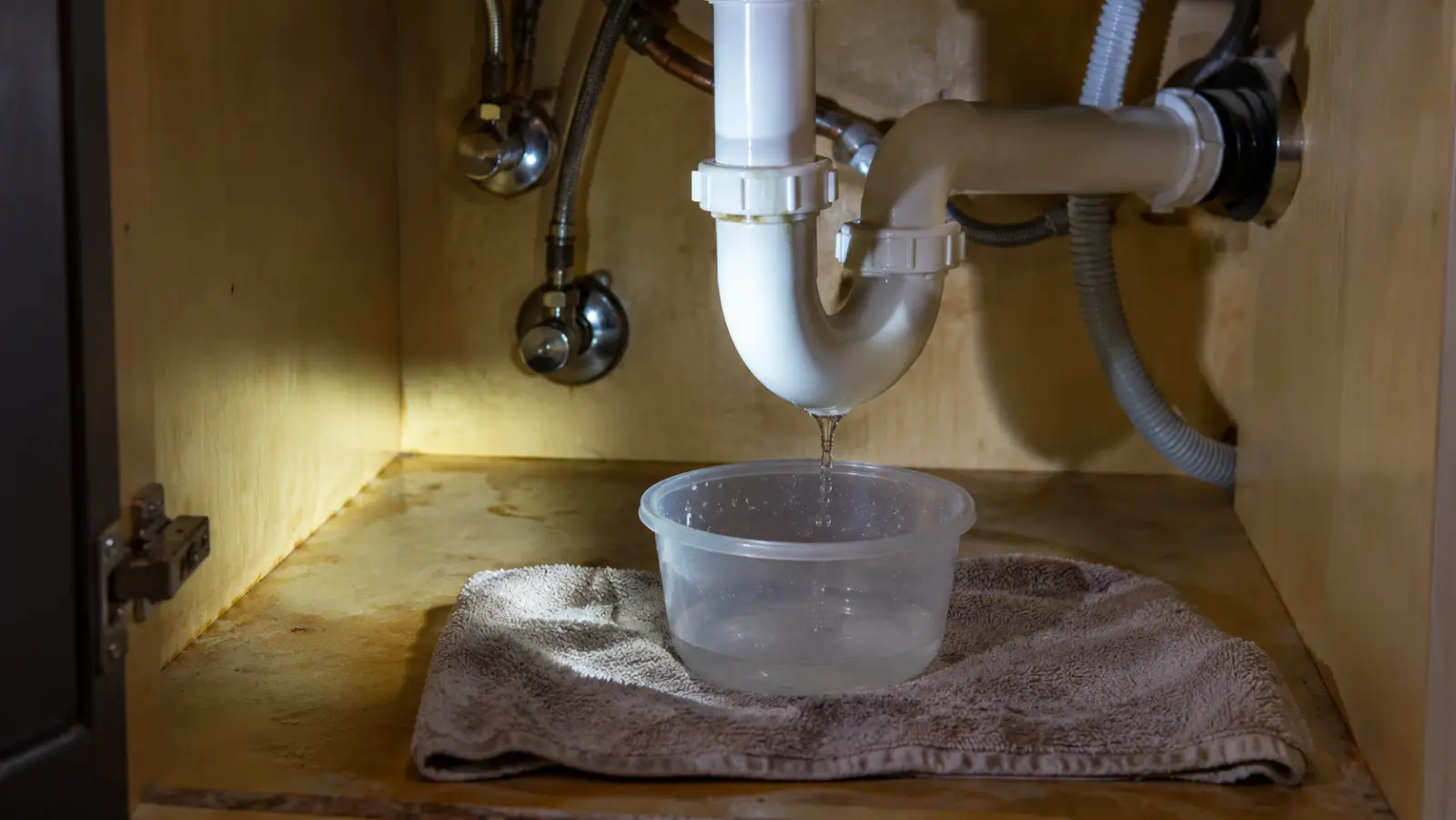
A wet cabinet floor under the kitchen sink is common, and the cabinet can be damaged before you notice. There are a lot of connections under a kitchen sink, but finding the leak is mostly a process of elimination. Here's how to track it down.
Empty the Cabinet and Dry Everything
Take everything out, dry the cabinet floor and every pipe and connection, and put a dry paper towel on the cabinet floor. Then test one thing at a time, watching where the first drop appears. Running a dry paper towel along each connection also finds slow drips.
1. Supply Lines and Shut-Off Valves
Test: with no water running, check the hot and cold valves and the lines going up to the faucet. These are under pressure all the time, so a leak here drips constantly.
Fix: snug a loose connection slightly. Replace old lines with braided stainless steel. Replace any valve that leaks around the stem or won't turn.
2. The Faucet
Test: run the faucet and watch the underside of the sink around the faucet base, and the pull-down hose if you have one.
Fix: a leak from the faucet base or the pull-down hose connection often means worn seals, or a hose that needs replacing. See leaky faucet: repair or replace.
3. The Sink Strainer
Test: plug the sink, fill it with a few inches of water, and watch where the drain basket meets the bottom of the sink.
Fix: a leak here means the seal under the strainer has failed. The strainer has to be removed and reset with new putty or a gasket.
4. The Drain Trap and Pipes
Test: pull the plug and let the full sink drain while you watch the curved trap and the pipes below it.
Fix: plastic slip nuts can loosen over time. Tighten them by hand. If a joint keeps leaking, the washer inside the nut may need replacing.
5. The Dishwasher Connection
Test: run the dishwasher and watch the drain hose where it connects to the disposal or drain, and the water supply line to the dishwasher.
Fix: tighten the hose clamp, or replace a cracked hose.
6. The Garbage Disposal
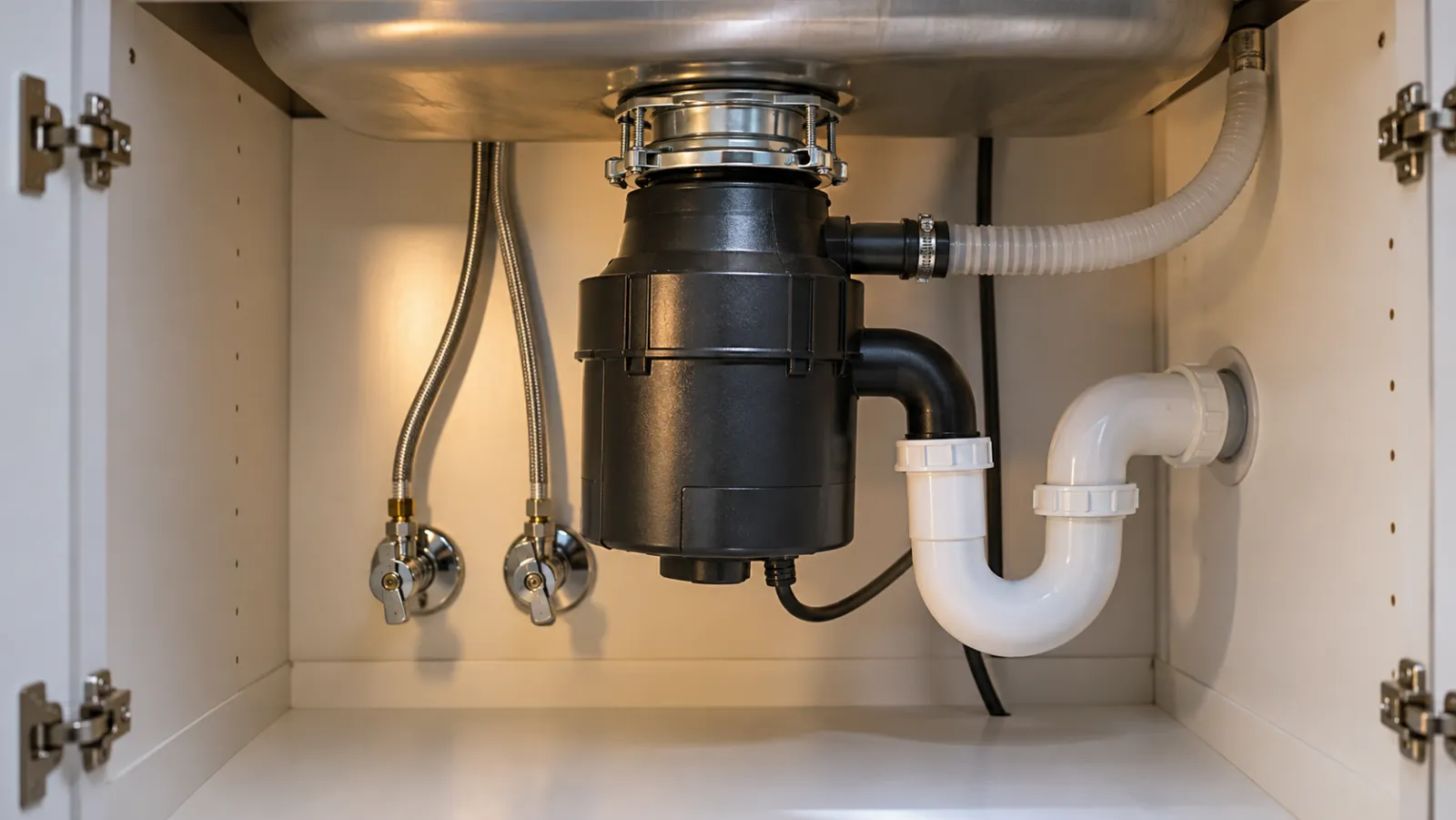
Test: run water and the disposal. Leaks can come from the sink flange at the top, the dishwasher hose on the side, the drain pipe connection, or the body of the unit.
Fix: connections can usually be tightened or resealed. A leak from the body means the disposal needs replacing. See garbage disposal fixes.
Don't Leave It
Even a slow drip ruins the cabinet floor, which is usually particleboard that swells when wet, and it can lead to mold. If the leak is behind the cabinet in the wall, or you can't find the source, call a plumber.
Kitchen Leak Help
Believe Plumbing fixes kitchen sink, faucet, disposal and drain leaks across Tampa Bay. Planning to replace the sink anyway? See kitchen remodel plumbing. Or see our faucet services and contact us.
Need a Plumber in Tampa Bay?
Believe Plumbing is available 24/7 for emergencies and offers free estimates on all services.