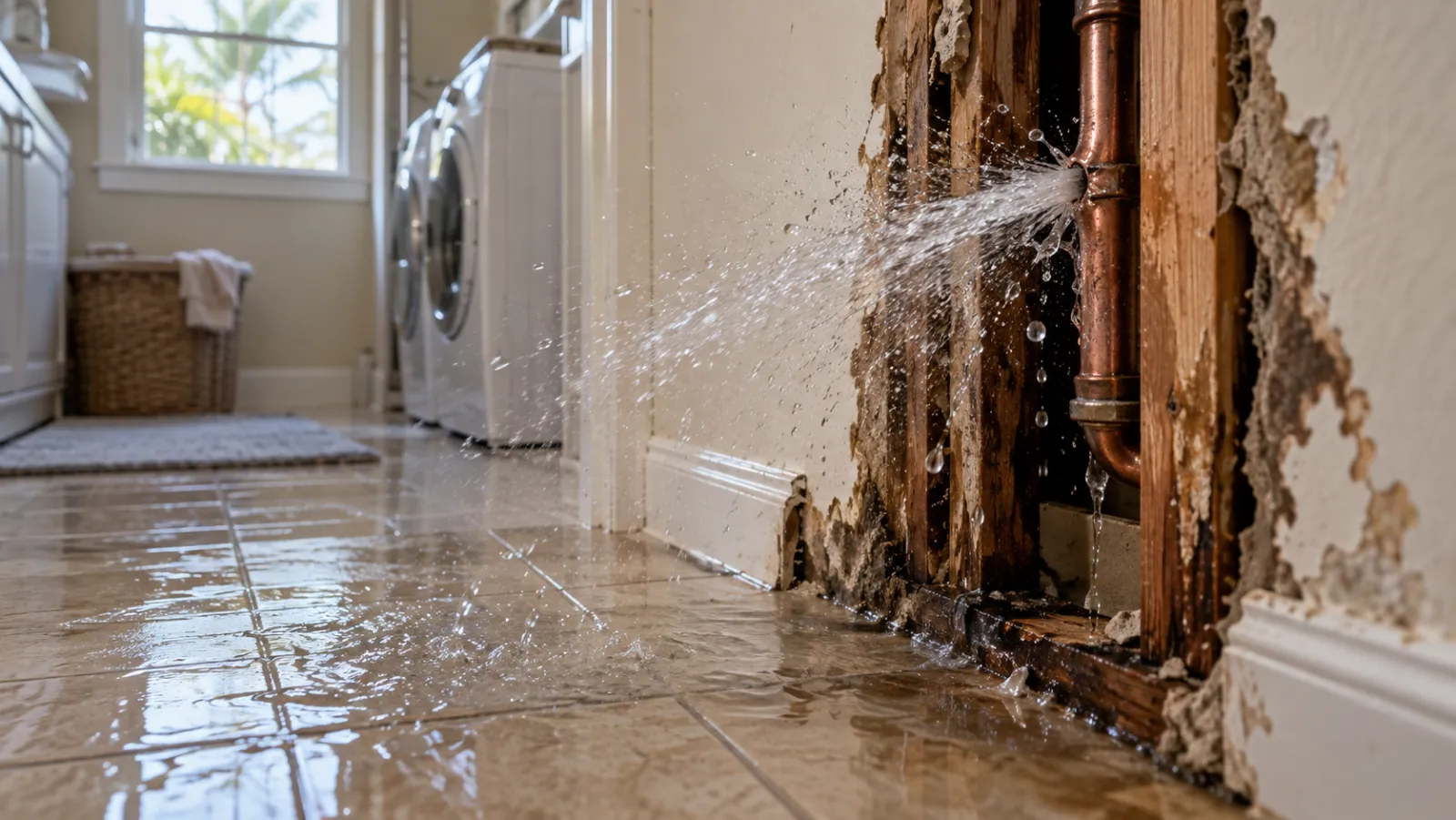
Water spraying from a wall, a ceiling starting to sag, a puddle spreading across the kitchen floor. When a pipe bursts, every minute the water runs means more damage to drywall, flooring and cabinets. Here's exactly what to do, in order, so you limit the damage and keep your insurance claim clean.
Minute 1: Shut Off the Main Water
This is the single most important step. Everything else can wait until the water is off.
In most Tampa Bay homes, the main shut-off valve is in one of these places:
- Where the water line enters the house. Usually on an outside wall near the front or side of the home, often close to a hose spigot. Look for a valve on a pipe coming up out of the ground.
- At the water meter. The meter box is usually near the street or sidewalk, under a small lid in the ground. The valve there sometimes needs a meter key or an adjustable wrench to turn.
- In a condo or townhome. Check the water heater closet, under the kitchen sink, or a utility closet. Some buildings have a shut-off for each unit in a hallway or mechanical room, so ask your HOA where yours is.
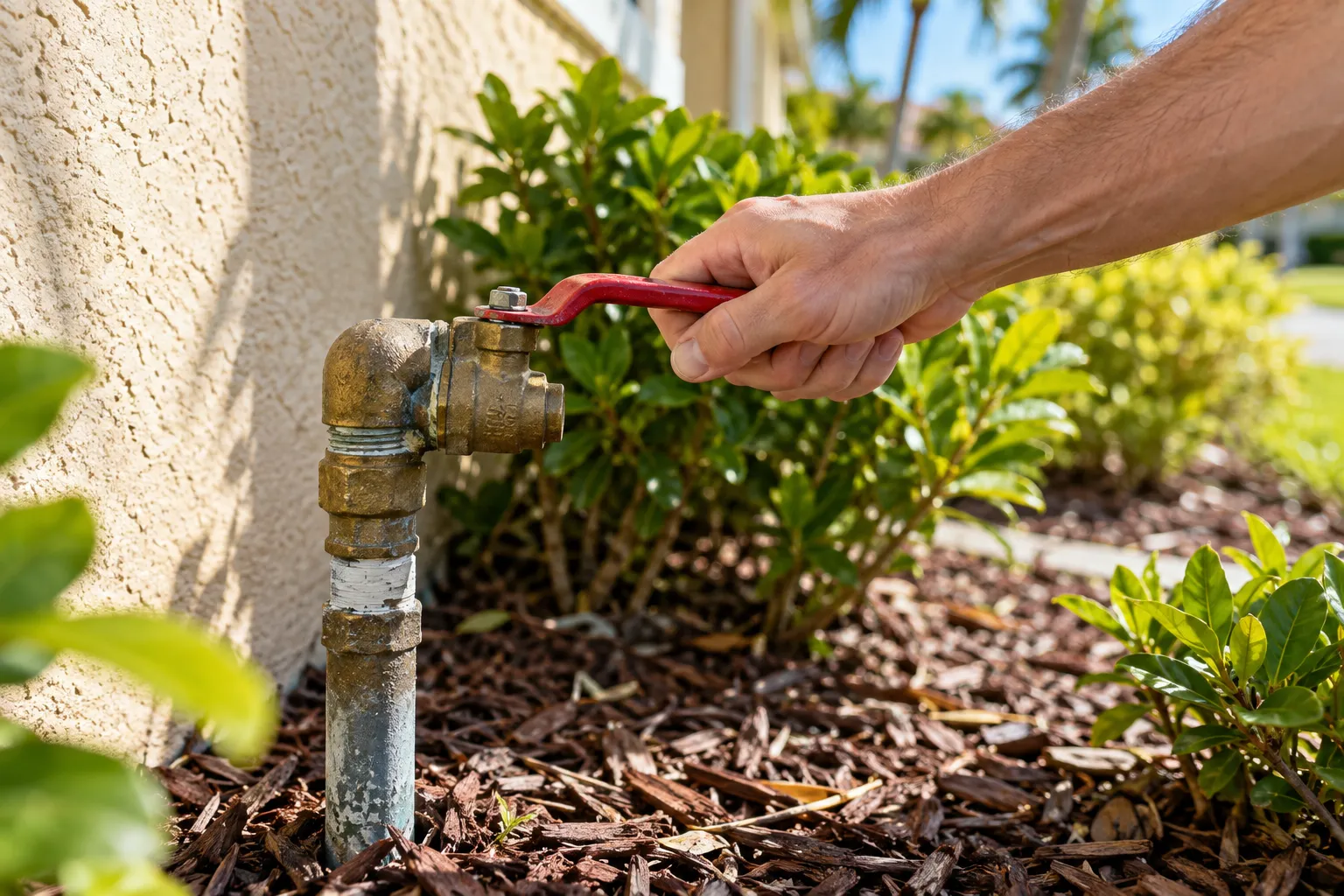
Turn the valve clockwise until it stops. A lever-style valve is off when the handle sits crosswise to the pipe.
If you can't find the main or it won't budge, close the small valve closest to the leak if there is one. Sinks and toilets have their own valves underneath. Then call a plumber right away.
Minute 2: Watch Out for Electricity
Don't walk into standing water if it's near outlets, power strips, appliances or the electrical panel. If you can reach the breaker panel without stepping through water, switch off the breakers for the affected rooms. If you can't, stay out of the area and call an electrician or the power company. Water damage is fixable. Electrical shock is not.
If water is pouring through a ceiling light fixture, don't touch the switch. Turn that circuit off at the panel.
Minute 3: Turn Off the Water Heater
With the main water off, your water heater isn't getting refilled. Turn it off so it doesn't heat an emptying tank. For an electric heater, switch off its breaker. For a gas heater, turn the gas control knob to "Pilot" or "Off."
Minutes 4 to 5: Drain the Lines
There's still water sitting in your pipes. Open the cold water taps at the lowest point in the house, like a bathtub or an outside hose spigot, and flush the toilets. That drains what's left in the lines so less of it ends up on your floor.
Minutes 5 to 8: Contain the Water
- Move furniture, rugs, electronics and anything valuable out of the wet area.
- Soak up what you can with towels, a mop or a wet/dry vacuum.
- Put buckets under active drips.
- If a ceiling is bulging with water, put a bucket underneath and keep everyone clear of it. A saturated ceiling can come down without warning.
Minutes 8 to 10: Take Photos and Video
Before you clean up too much, document everything on your phone: the broken pipe if you can see it, the water on the floor, wet walls and ceilings, and any damaged belongings. Take wide shots of each room and close-ups of the damage.
Then call your homeowner's or renter's insurance company to report it. Most policies cover damage from a sudden, accidental burst pipe, but policies differ, so ask what yours covers. A few things that help your claim:
- Keep the broken section of pipe if the plumber removes it.
- Ask your plumber for a written description of what failed and why.
- Keep every receipt, from the plumber to the towels and fans you bought.
- Don't throw out damaged items until the adjuster has seen them or tells you it's OK.
After the Water Is Off: Get It Repaired and Dried Out
Call a licensed plumber to repair the pipe. Don't turn the main water back on until the repair is done, even to run a quick load of dishes.
If the source isn't visible, for example water coming from inside a wall, under a slab floor or through the ceiling, it may need to be located first. A leak detection company finds the exact spot, and then we make the repair.
Then deal with the moisture. Florida's heat and humidity mean mold can start growing on wet drywall and under flooring within 24 to 48 hours. For anything more than a small spill, call a water damage restoration company to dry out the walls and floors with professional fans and dehumidifiers. Many insurance companies expect you to take this step to prevent further damage.
Why Pipes Burst in Tampa Bay Homes
Up north, burst pipes usually mean frozen pipes. Freezes are rare here, though exposed pipes can still crack on the few nights a year that drop well below freezing. In Tampa Bay, most bursts and sudden leaks come from:
- Aging pipe. Gray polybutylene pipe in homes built from the late 1970s to the mid-1990s can fail at the fittings without warning. Galvanized steel in older homes rusts from the inside, and older copper develops pinhole leaks.
- High water pressure. Pressure above about 80 psi strains every pipe, fitting and hose in the house. A pressure-reducing valve keeps it in a safe range.
- Failed supply hoses. Rubber hoses on washing machines, toilets, faucets and ice makers crack with age and are one of the most common sources of sudden indoor flooding.
- Water hammer. The banging you hear when a valve snaps shut stresses joints over time.
How to Prevent the Next One
- Find your main shut-off today, before there's an emergency, and make sure everyone in the house knows where it is.
- Turn it off and back on once a year. Valves that sit untouched for years can seize right when you need them. If yours is stuck or leaks, have it replaced.
- Check your water pressure. A pressure gauge that screws onto a hose spigot costs about $10 at a hardware store. If it reads above 80 psi, have a plumber look at your pressure-reducing valve.
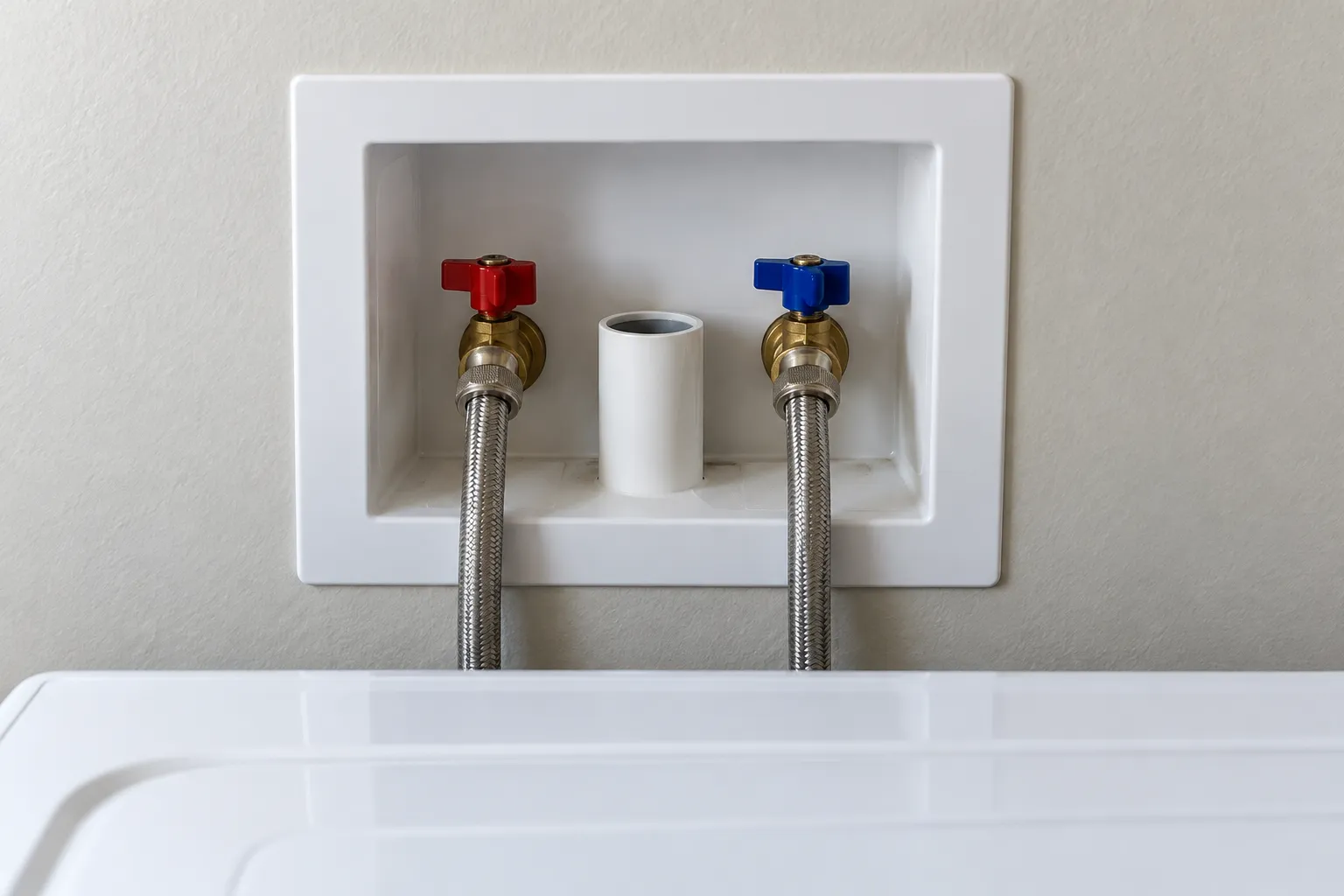
- Replace rubber supply hoses with braided stainless steel ones, especially on the washing machine.
- Shut off the main before you travel or evacuate for a storm. A burst pipe in an empty house can run for days. Our hurricane season plumbing guide has more on this.
- Know what pipe you have. If your home has polybutylene or galvanized pipe, or you've had more than one leak, a repipe may save you from the next emergency.
Need a Burst Pipe Repaired?
Believe Plumbing repairs burst and broken pipes across Tampa Bay, from a single failed fitting to a whole-home repipe with PEX or copper. All work is permitted, and estimates are free. See our pipe repair services or emergency plumbing, or contact us. We serve Tampa, Carrollwood, Westchase, Brandon, Riverview and the rest of the Bay area.
Need a Plumber in Tampa Bay?
Believe Plumbing is available 24/7 for emergencies and offers free estimates on all services.