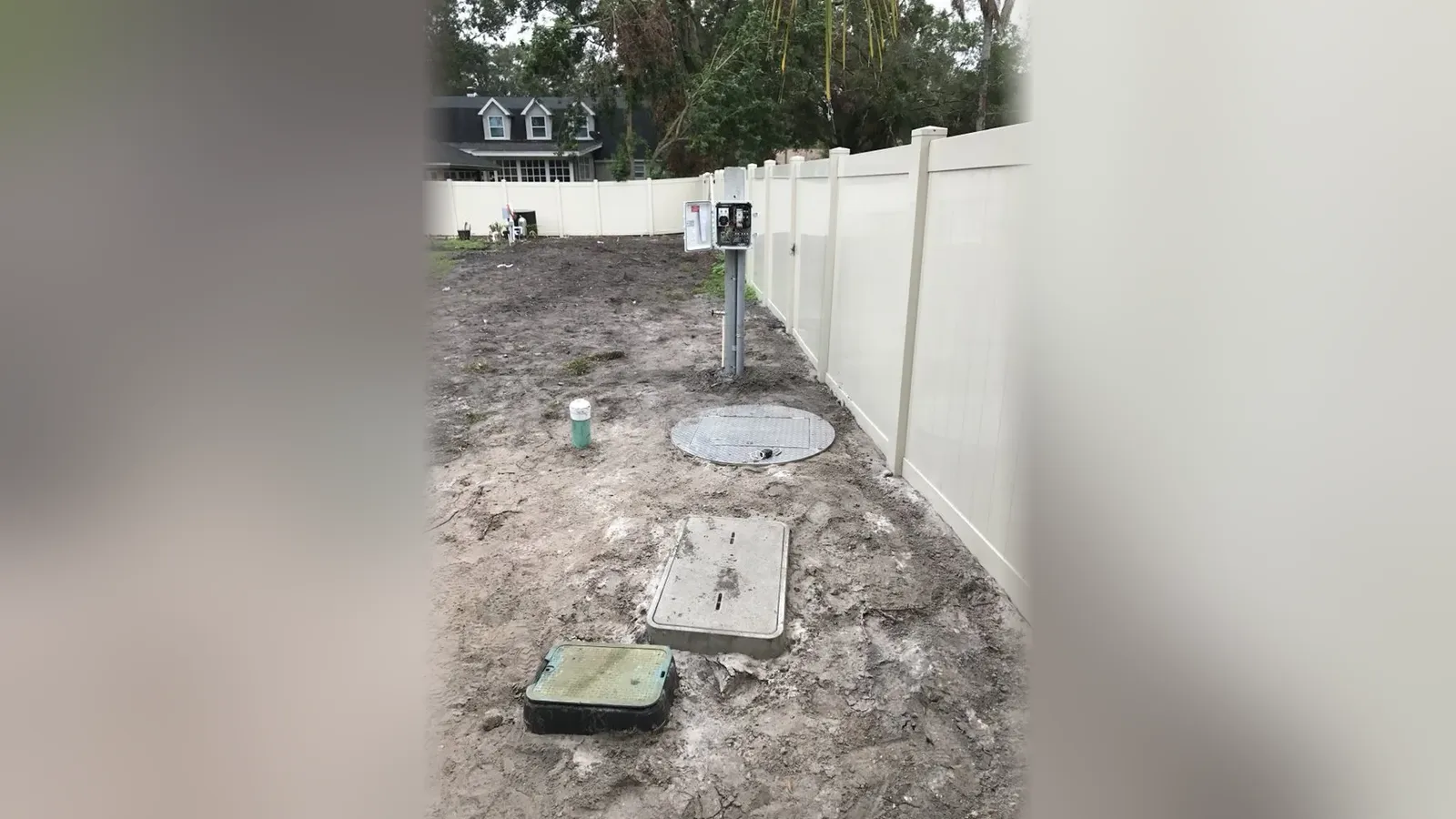
Most sewer systems work by gravity: waste flows downhill from the house to the sewer main. But in flat Florida, some homes and businesses sit too low, too far, or on the wrong side of a slope for gravity to do the job. That's where a lift station or grinder pump comes in. If your property has one, here's what you should know.
What They Are
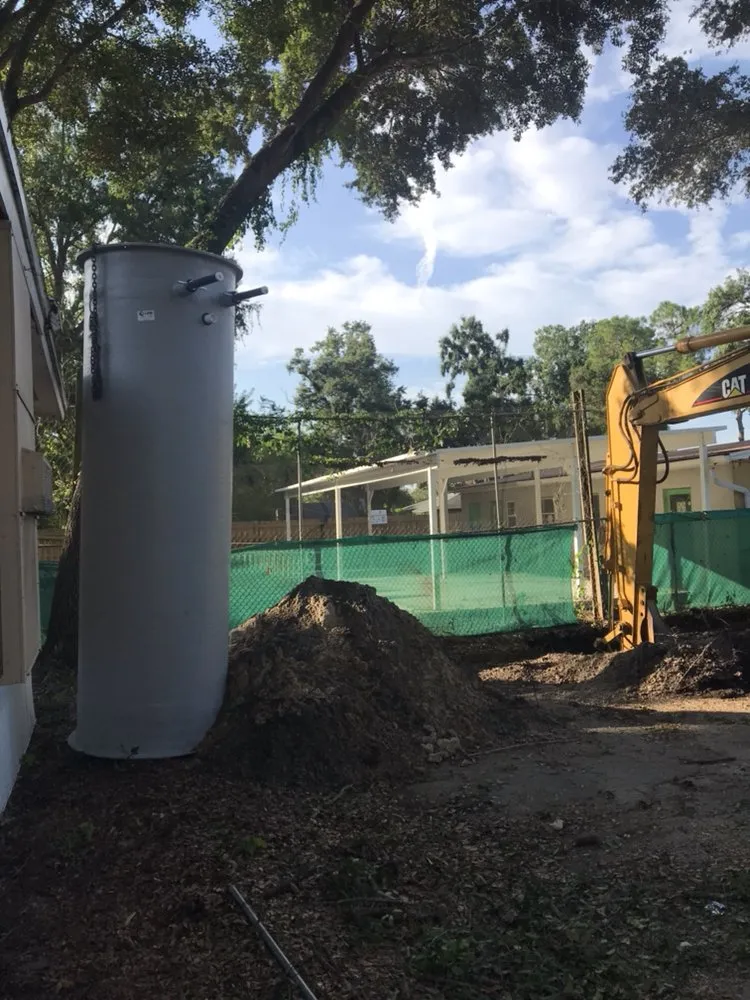
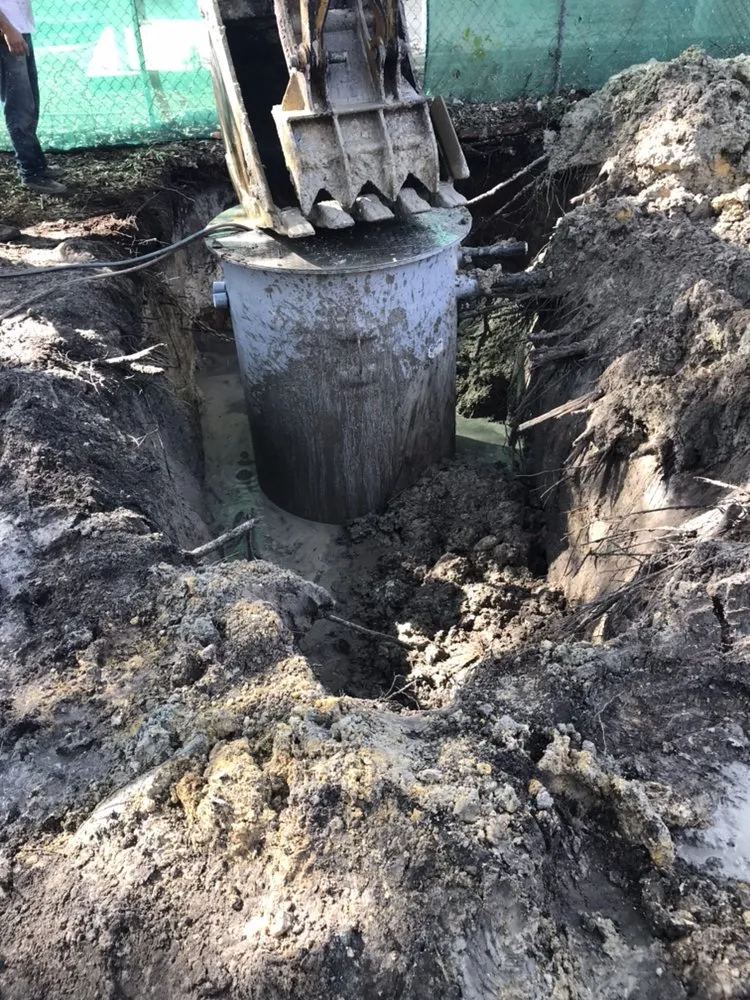
A lift station is a buried tank, or basin, with a pump inside. Wastewater flows into the basin by gravity. When it reaches a set level, a float switch turns on the pump, which pushes the wastewater up through a pressure pipe to the sewer main or to a point where gravity can take over.
A grinder pump does the same job but first grinds the waste into a slurry so it can be pumped through a small pressure line. They're common in neighborhoods with low-pressure sewer systems.
Either way, you'll usually see one or more lids in the yard and a control panel with an alarm light mounted nearby.
The Alarm Means Something
The control panel has a high-water alarm, usually a red light and a buzzer. If it goes off, the basin is filling faster than the pump is emptying it. That can mean the pump failed, a float is stuck, the breaker tripped, or too much water is going in at once.
- Stop using water right away. No showers, laundry, dishwasher or flushing.
- Check the breaker for the pump. If it tripped, reset it once. If it trips again, leave it off.
- Call a plumber. The basin only holds so much, and once it's full, sewage backs up into the lowest drains.
Silencing the buzzer doesn't fix the problem. Most panels have a silence button so you're not listening to it while you wait for help.
What Not to Flush
Pumps are tougher than they look, but some things jam or wear them out fast:
- Wipes of any kind, including "flushable" ones
- Paper towels, feminine products and dental floss
- Grease and cooking oil
- Cat litter, coffee grounds and anything that isn't toilet paper or waste
Power Outages
A lift station or grinder pump needs electricity. When the power goes out, the basin can still take in some water, but not much. During an outage, especially after a storm, use as little water as possible until power is back. Some owners add a generator connection for this reason. See plumbing after a hurricane.
Maintenance
- Test the alarm periodically so you know it works.
- Keep the lids clear, accessible and closed.
- Watch for the pump running more often or longer than usual, which can mean a leak in the house or water getting into the basin.
- Have the system inspected periodically, especially for commercial properties and shared systems.
Who Owns It?
Some lift stations and grinder pumps belong to the homeowner or business. Others, especially shared systems in a neighborhood, belong to the utility or an association. Check before calling, since it affects who pays for repairs.
Lift Station Help
Believe Plumbing installs lift stations for homes and commercial properties across Tampa Bay. See photos in our work, our sewer line and commercial plumbing services, or contact us.
Need a Plumber in Tampa Bay?
Believe Plumbing is available 24/7 for emergencies and offers free estimates on all services.