
If your home is on a septic system, the drain field is the part that does most of the work, and it's also the most expensive part to replace. Many homes around Plant City, Riverview, Valrico and other outlying parts of Tampa Bay rely on septic. Here's how a drain field works, the signs it's failing, and what you can do about it.
How a Septic System Works
Wastewater from the house flows into the septic tank. Solids settle to the bottom, grease and scum float to the top, and the liquid in the middle flows out to the drain field, also called a leach field. The drain field is a set of perforated pipes or chambers buried in gravel or sand, where the liquid soaks into the soil and is filtered naturally.
A drain field can only work if the soil can absorb water and the pipes stay clear. When either one fails, the water has nowhere to go.
Warning Signs
- Soggy ground or standing water over the drain field, especially when it hasn't rained
- Grass that's much greener over the drain field than the rest of the yard
- Sewage odors outside near the tank or drain field, or inside the house
- Slow drains throughout the house, or gurgling
- Sewage backing up into the lowest drains, like a tub or shower
Why Drain Fields Fail
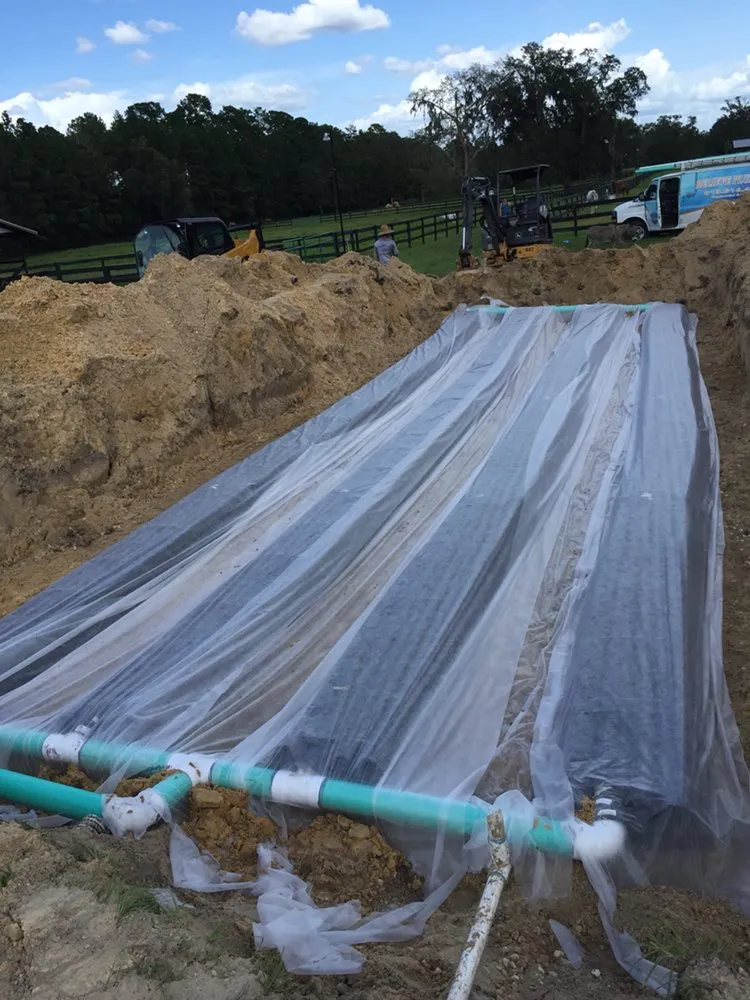
- Solids reaching the field. If the tank isn't pumped often enough, solids flow out and clog the soil and pipes. Most tanks need pumping every 3 to 5 years, depending on size and household use.
- Too much water. Long showers, many loads of laundry in a row, leaking toilets and irrigation that soaks the drain field all overload it.
- Florida's high water table. In the rainy season, groundwater rises and the soil can't absorb as much. Older systems built closer to the water table struggle most.
- Roots and traffic. Tree roots invade the pipes, and driving or parking on the field crushes them.
- Age. Even a well-kept drain field eventually reaches the end of its life.
How to Protect Your Drain Field
- Have the tank pumped on schedule and keep the records.
- Spread out laundry and fix running toilets and dripping faucets.
- Keep grease, wipes, paper towels and harsh chemicals out of the drains.
- Point gutters and sprinklers away from the drain field.
- Don't drive, park or build over it, and keep trees away.
- After a flood, use as little water as possible until the ground dries. See plumbing after a hurricane or flood.
What Replacement Involves
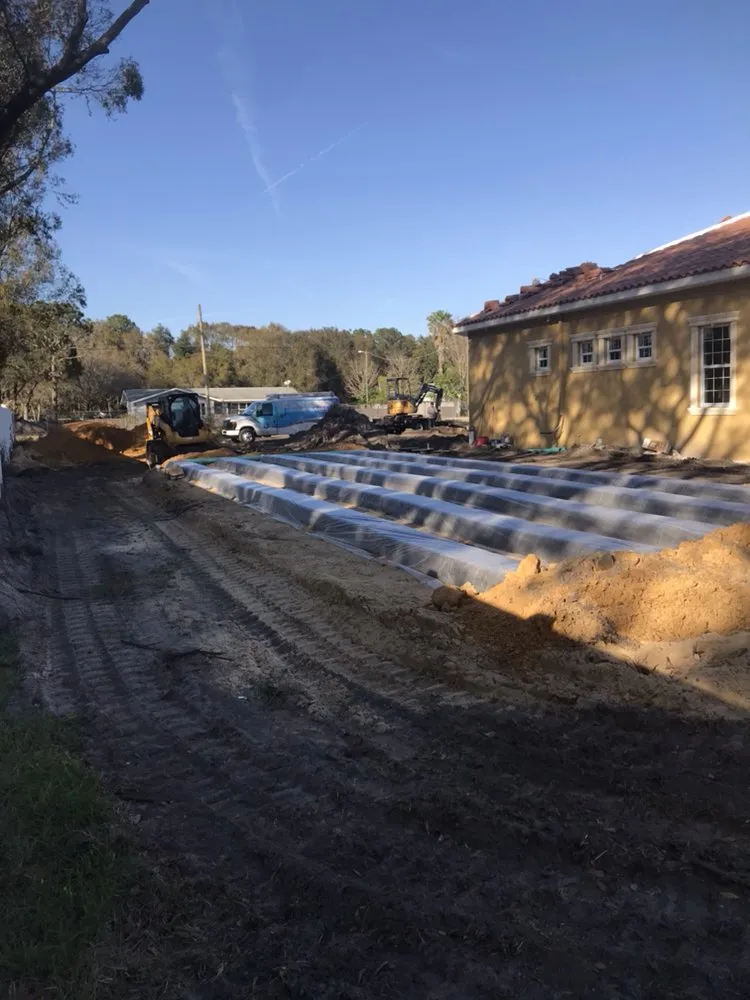
When a drain field has failed, it usually has to be replaced. In Florida, septic work requires a permit through the county health department, and the new drain field has to be sized and placed to meet state soil and setback requirements. The work involves removing or abandoning the old field, building the new one, connecting it to the tank, and passing inspection before it's covered.
Sometimes the problem is in the tank, the line between the house and the tank, or a single section of the field, so it's worth having the whole system evaluated before deciding.
Buying a Home on Septic?
Have the system inspected before you close. Ask for pumping records, and find out where the tank and drain field are. See inspections for home buyers.
Septic Help
Believe Plumbing installs and replaces septic systems and drain fields and inspects existing systems across Hillsborough and Pinellas counties. See our septic services, photos in our work, or contact us.
Need a Plumber in Tampa Bay?
Believe Plumbing is available 24/7 for emergencies and offers free estimates on all services.