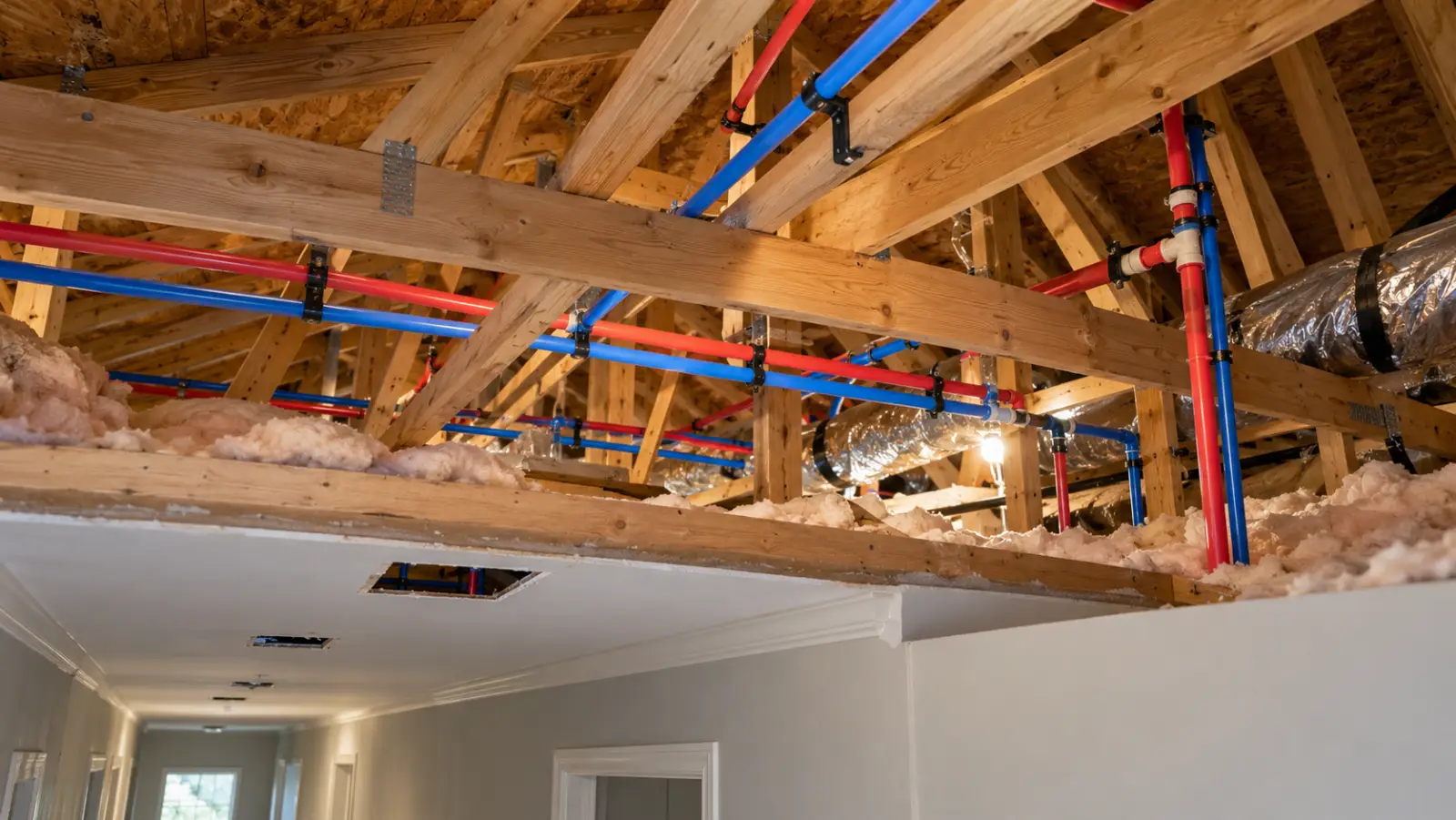
Every leak repair buys time. But in an older home, there comes a point where patching one leak after another costs more, and risks more water damage, than replacing the pipes. That's a repipe: replacing the water supply lines throughout the house. Here's how to tell when it's time and what to expect.
Signs It's Time
- Repeated leaks. One leak can be a fluke. Two or three in a few years usually means the whole system is wearing out.
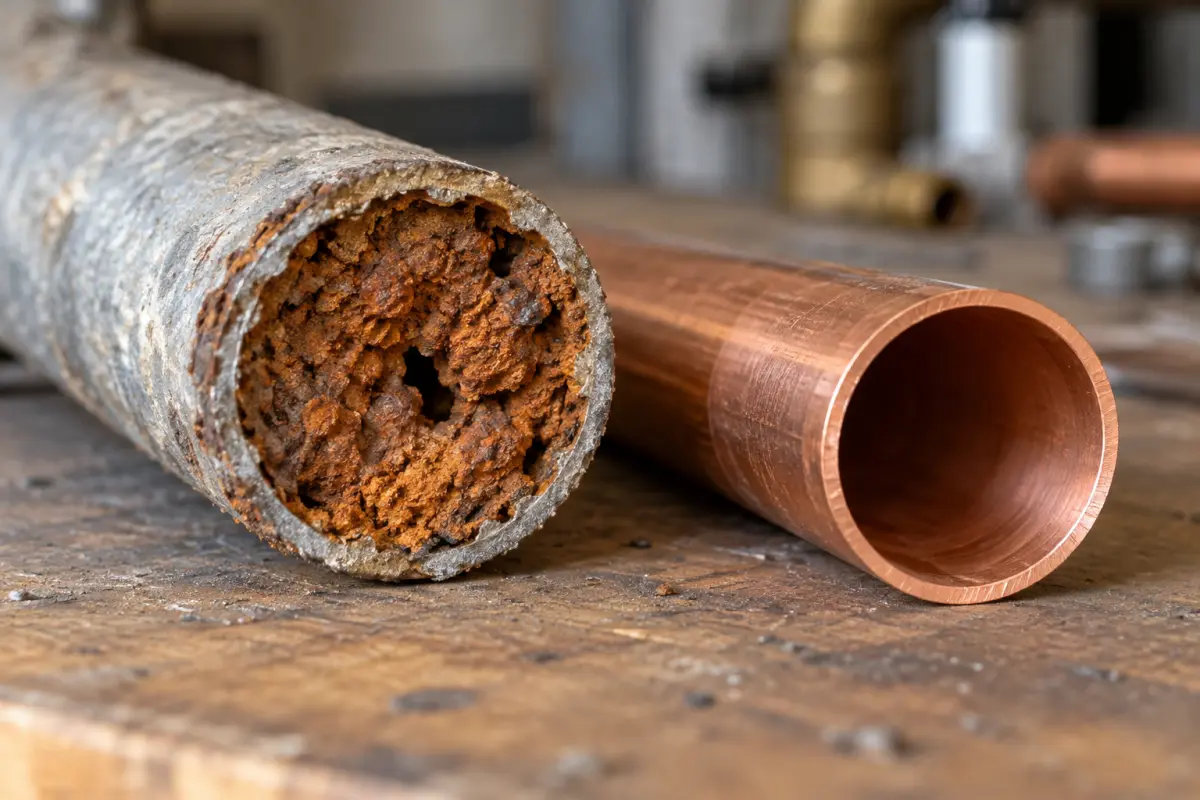
- Rusty or discolored water, especially when you first turn on a tap. That points to galvanized steel pipe rusting from the inside.
- Low water pressure throughout the house that has dropped gradually over years. See low water pressure causes.
- Pinhole leaks in copper pipe, often showing up as damp drywall or stains.
- Polybutylene pipe. Gray polybutylene, common in homes built from the late 1970s to the mid-1990s, can fail without warning, and many insurers ask about it. See polybutylene pipes.
- Galvanized pipe in homes built before the 1960s, or in sections added later.
- Insurance or a home sale. An insurer or buyer's inspector may flag old pipe types.
What a Repipe Involves
A repipe replaces the water supply lines, the pipes that carry water to your fixtures, not the drains. Here's the usual process:
- Planning and permit. The plumber maps the new routes and pulls the permit.
- Protecting your home. Floors and furniture are covered in the work areas.
- Running new lines. In most single-story Florida homes, new lines run through the attic and drop down inside the walls to each fixture. Small access openings are cut in walls or ceilings where needed.
- Connecting fixtures. Each sink, toilet, shower, the water heater and outdoor faucets are connected to the new lines, usually with new shut-off valves.
- Testing and inspection. The system is pressure-tested and inspected.
- Patching. The access openings are patched.
Most homes are repiped in a few days, depending on size and layout. Water is usually only off for part of the time, and most families stay in the home during the work.
PEX or Copper?
PEX is a flexible plastic pipe and the most common choice for repipes today. It costs less, needs fewer fittings, holds up well against hard-water scale, and can be snaked through walls with fewer openings. Copper is the traditional choice, durable and long-lasting, but it costs more and can develop pinhole leaks over decades in some water conditions. We install both and will tell you which fits your home.
Partial Repipe or Whole House?
Sometimes only part of the house has failing pipe, like one bathroom wing or the line to the kitchen. A partial repipe can make sense then. But if the whole house is the same age and material, the rest is likely to fail soon too, and doing it all at once is usually more cost-effective. Planning a remodel? That's the ideal time. See bathroom remodel plumbing.
Thinking About a Repipe?
Believe Plumbing repipes homes across Tampa Bay with PEX or copper. We'll look at what you have and tell you honestly whether spot repairs or a repipe makes more sense. See our pipe repair and repiping services, including Tampa, St. Petersburg and Pinellas Park, or contact us for a free estimate.
Need a Plumber in Tampa Bay?
Believe Plumbing is available 24/7 for emergencies and offers free estimates on all services.