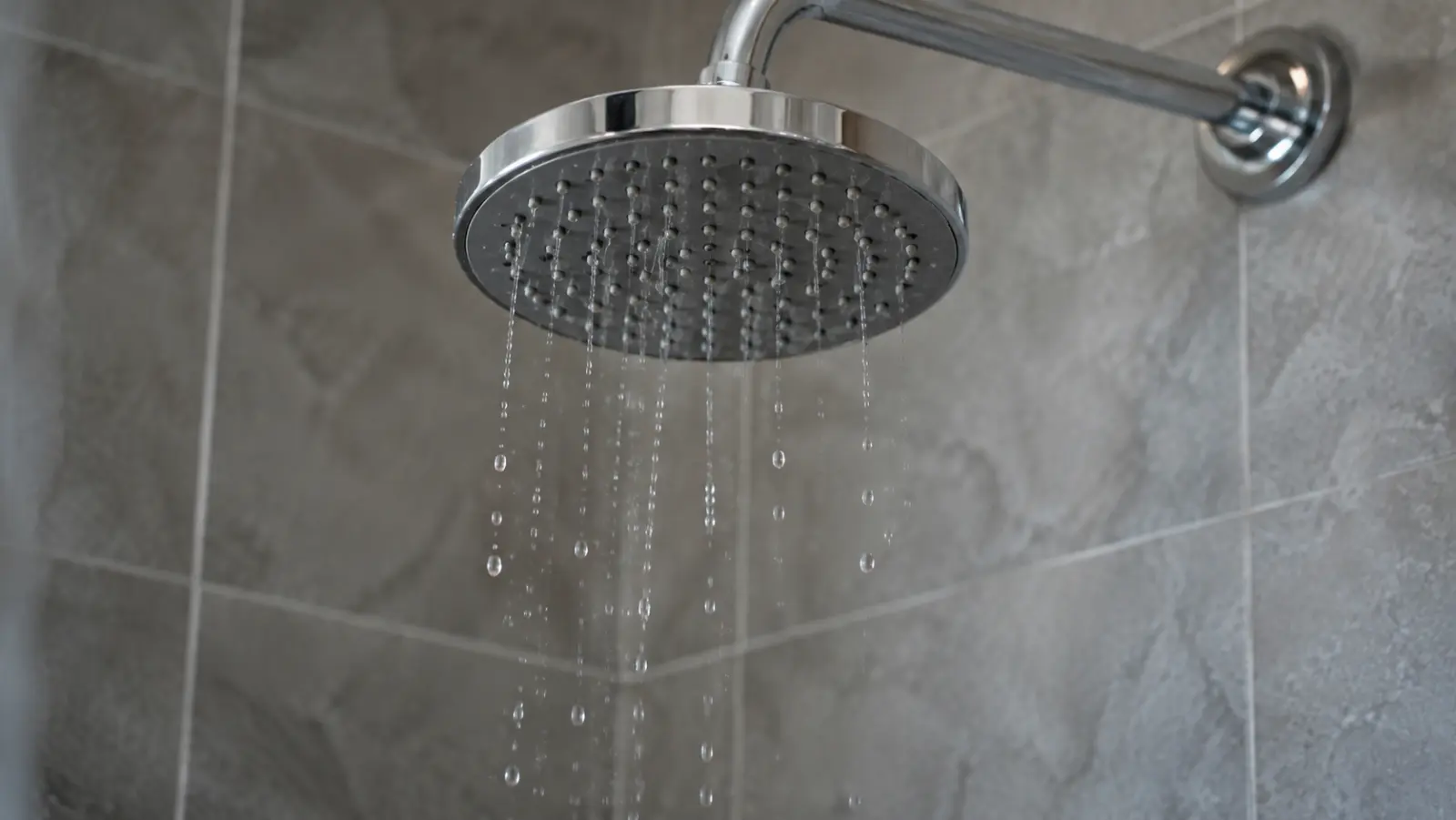
A shower that barely trickles or a sink that takes forever to fill is frustrating, but low water pressure is usually a clue that points to a specific cause. The trick is narrowing down where the problem is. Here's how to work through it, starting with the easy fixes.
First: One Fixture or the Whole House?
Run the cold water at a few faucets and a shower around the house.
- Only one faucet or shower is weak: the problem is at that fixture. Start with the aerator or showerhead.
- Only the hot water is weak: the problem is likely at the water heater.
- Everything is weak: the problem is with the main supply, the pressure regulator, the pipes, or a leak.
One Fixture: Clogged Aerator or Showerhead
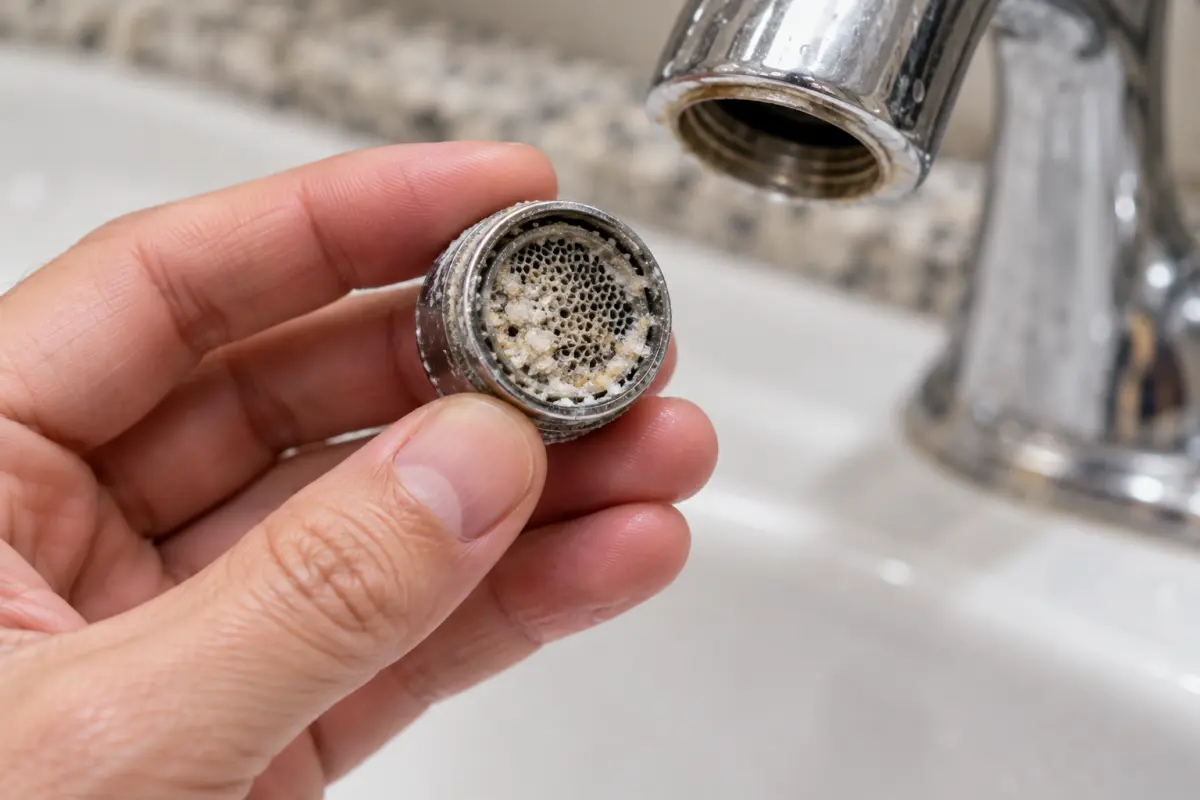
Tampa Bay's hard water leaves mineral scale that clogs the small screens in faucet aerators and the holes in showerheads. Unscrew the aerator from the end of the spout, or the showerhead from its arm, and soak it in white vinegar for an hour or two. Scrub it with an old toothbrush and rinse it. If it's badly scaled, replacements are cheap.
If cleaning doesn't help, the faucet's cartridge may be scaled up. See leaky faucet: repair or replace.
Hot Water Only: Check the Water Heater
Weak hot water with normal cold water usually means sediment in the water heater or its outlet, or a partly closed valve on the hot line. Sediment from our hard water builds up in tank heaters over time. Read why your water heater is popping for how to flush it.
The Whole House: Common Causes
A partly closed main valve. If the pressure dropped after recent plumbing work or after you shut the water off, make sure the main shut-off valve is fully open.
A failing pressure-reducing valve. Many homes have a pressure-reducing valve (PRV) where the main line enters the house. It keeps city pressure in a safe range. When a PRV wears out, it can drop pressure too low, or let it climb too high. Either way, it needs replacing.
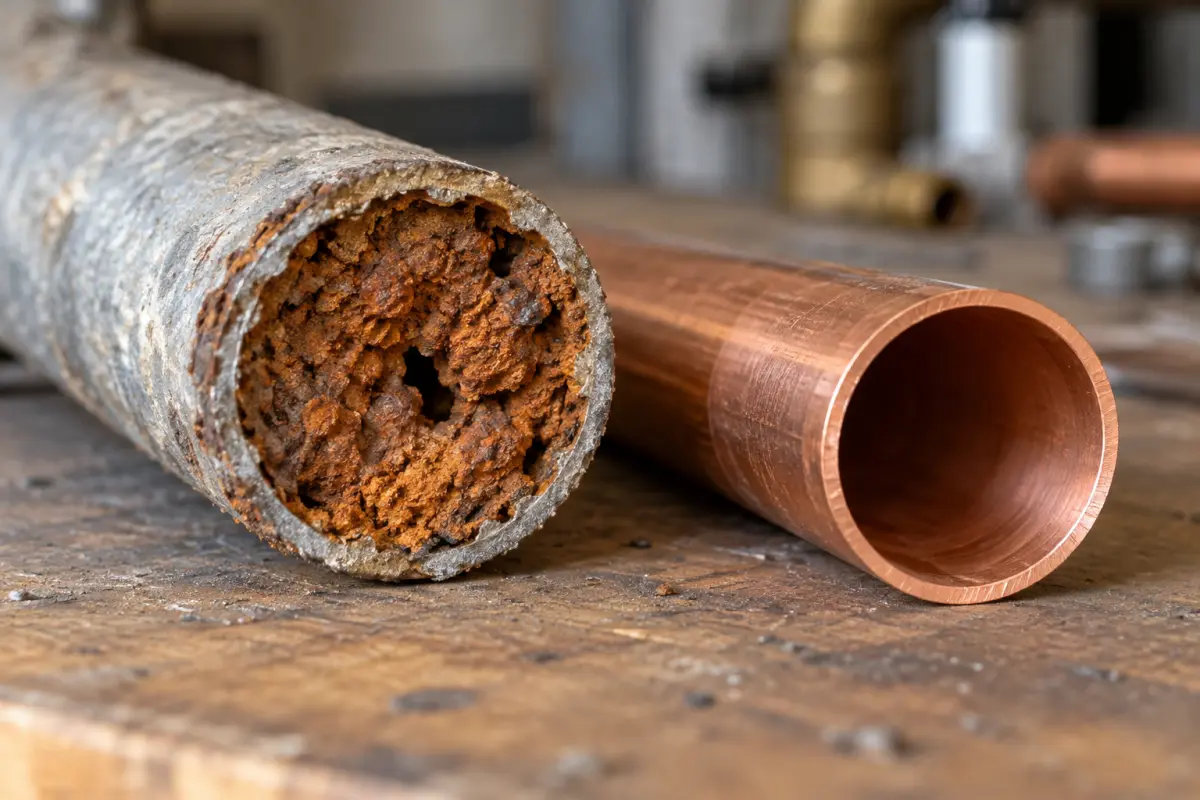
Old galvanized pipe. Homes built before the 1960s often have galvanized steel supply pipe, and some later homes have sections of it. Galvanized pipe rusts from the inside until the opening is a fraction of its original size. Pressure drops gradually over years, and the water may look rusty when you first turn it on.
A leak. A leak in the supply line, under the slab or in the yard, can lower pressure throughout the house. To check, turn off every faucet and appliance that uses water, then look at your water meter. If the meter's leak indicator or dial is still moving, water is going somewhere.
The city supply. If neighbors have low pressure too, the problem may be on the utility's side, like a water main repair. Call your water utility.
Test Your Pressure
A pressure gauge that screws onto an outside hose spigot costs about $10 at a hardware store. With nothing else running, normal home pressure is roughly 40 to 80 psi. Below 40 feels weak. Above 80 is hard on pipes, fittings and appliances, and is a common reason pipes and hoses fail. Our post on what to do when a pipe bursts explains why.
When to Call a Plumber
- Pressure is low throughout the house and the main valve is fully open
- Your gauge reads below 40 or above 80 psi
- The meter shows water moving with everything off
- Your water looks rusty or your home has galvanized pipe
- Pressure has dropped gradually over months or years
A failing pressure regulator is a straightforward replacement. If old galvanized pipe is the problem, the lasting fix is a repipe with PEX or copper, which restores full pressure and takes care of rusty water at the same time.
Get Your Pressure Back
Believe Plumbing tracks down low water pressure across Tampa Bay, from pressure regulators to whole-home repipes. See our pipe repair and repiping services, including Tampa, Pinellas Park and Riverview, or contact us for a free estimate.
Need a Plumber in Tampa Bay?
Believe Plumbing is available 24/7 for emergencies and offers free estimates on all services.