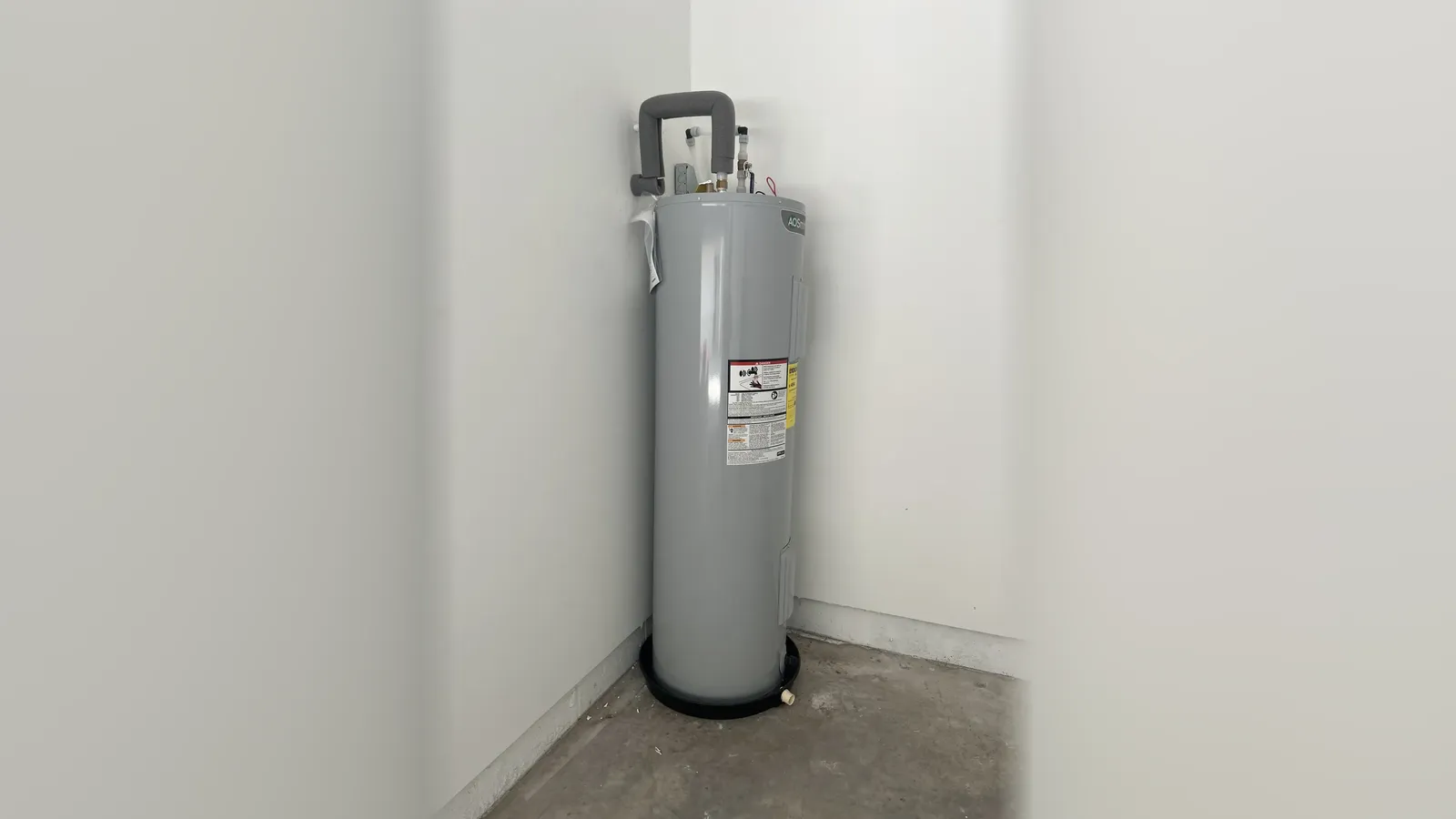
If your water heater pops, rumbles or crackles while it's heating, you're not imagining it, and you're not alone. It's one of the most common things Tampa Bay homeowners ask us about. In most cases the cause is mineral sediment from our hard water. Here's what's happening inside the tank, whether you need to worry, and what to do about it.
What Causes the Popping
Tampa Bay's water is hard, meaning it carries a lot of dissolved calcium and magnesium. When water is heated, some of those minerals come out of the water and settle to the bottom of the tank as a layer of sediment.
On a gas water heater, the burner heats the bottom of the tank. Small pockets of water get trapped under the sediment, overheat, and turn to steam. When those bubbles push up through the sediment, they pop. The thicker the layer, the louder it gets.
On an electric water heater, minerals crust onto the lower heating element. You're more likely to hear sizzling, hissing or crackling than loud pops.
Is It Dangerous?
Usually not right away. But it's a sign the heater is working harder than it should:
- It wastes energy. Sediment insulates the water from the heat, so the burner or element runs longer to do the same job.
- It shortens the tank's life. Overheating at the bottom stresses the steel and the glass lining, which leads to leaks.
- You get less hot water. Sediment takes up space that used to hold water.
Call a plumber right away if the noise comes with water around the base of the tank, water coming out of the relief valve pipe, a gas smell, or a loud bang or screech you haven't heard before.
Other Sounds and What They Mean
- Hissing or sizzling: on an electric heater, usually a crusted element. On a gas heater it can be condensation dripping on the burner, which is normal on a cold start, or a leak dripping onto it, which isn't. Check for water.
- Ticking: pipes expanding and contracting as hot water moves through them. Normal.
- Screeching or whistling: often a partly closed valve or a relief valve problem. Have it checked.
- Banging when a faucet shuts off: that's water hammer in the pipes, not the heater.
How to Flush Your Water Heater
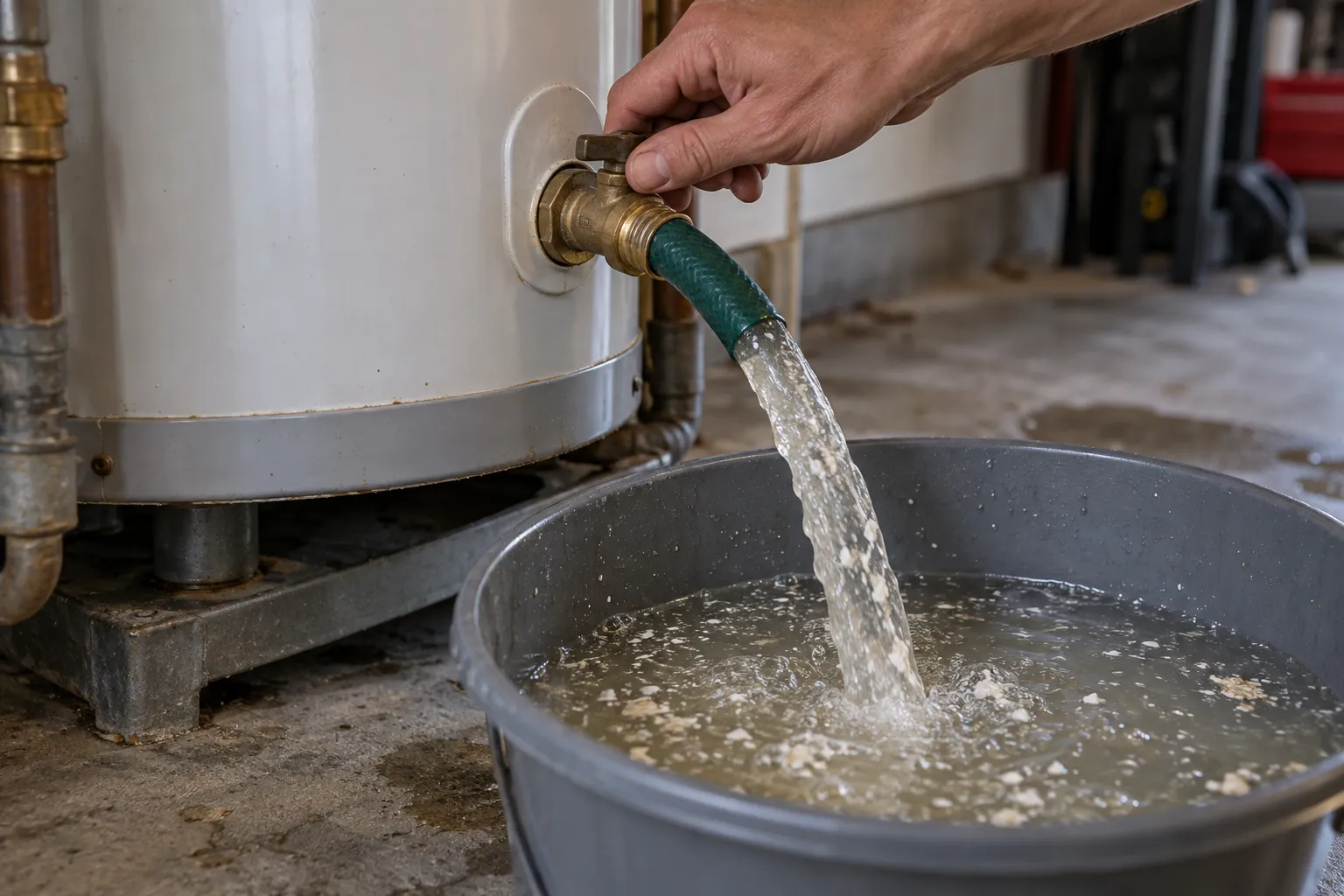
Flushing the tank once a year removes sediment before it builds up. If you're comfortable with basic home maintenance, here's how to do it on a tank water heater:
- Turn off the heat. For electric, switch off the breaker. For gas, turn the control knob to "Pilot" or "Vacation."
- Let the water cool for a few hours. Tank water is hot enough to scald.
- Connect a garden hose to the drain valve at the bottom of the tank and run it to a floor drain, the driveway or outside.
- Open a hot water faucet somewhere in the house so the tank can drain freely.
- Open the drain valve and let it run until the water comes out clear. Briefly opening the cold water supply valve at the top of the tank can stir up more sediment.
- Close the drain valve, make sure the cold supply is fully open, and let the tank refill. Keep the hot faucet open until water flows from it steadily with no sputtering.
- Turn the heat back on. On an electric heater, never turn the breaker back on until the tank is completely full, or the elements will burn out.
A word of caution: if the tank hasn't been flushed in years, heavy sediment can clog the drain valve, and older plastic valves sometimes won't seal again after they're opened. If the valve won't drain or starts to drip, close it and call a plumber.
Tankless water heaters don't collect sediment the same way, but hard water builds scale inside them too. They should be descaled about once a year.
Check the Anode Rod
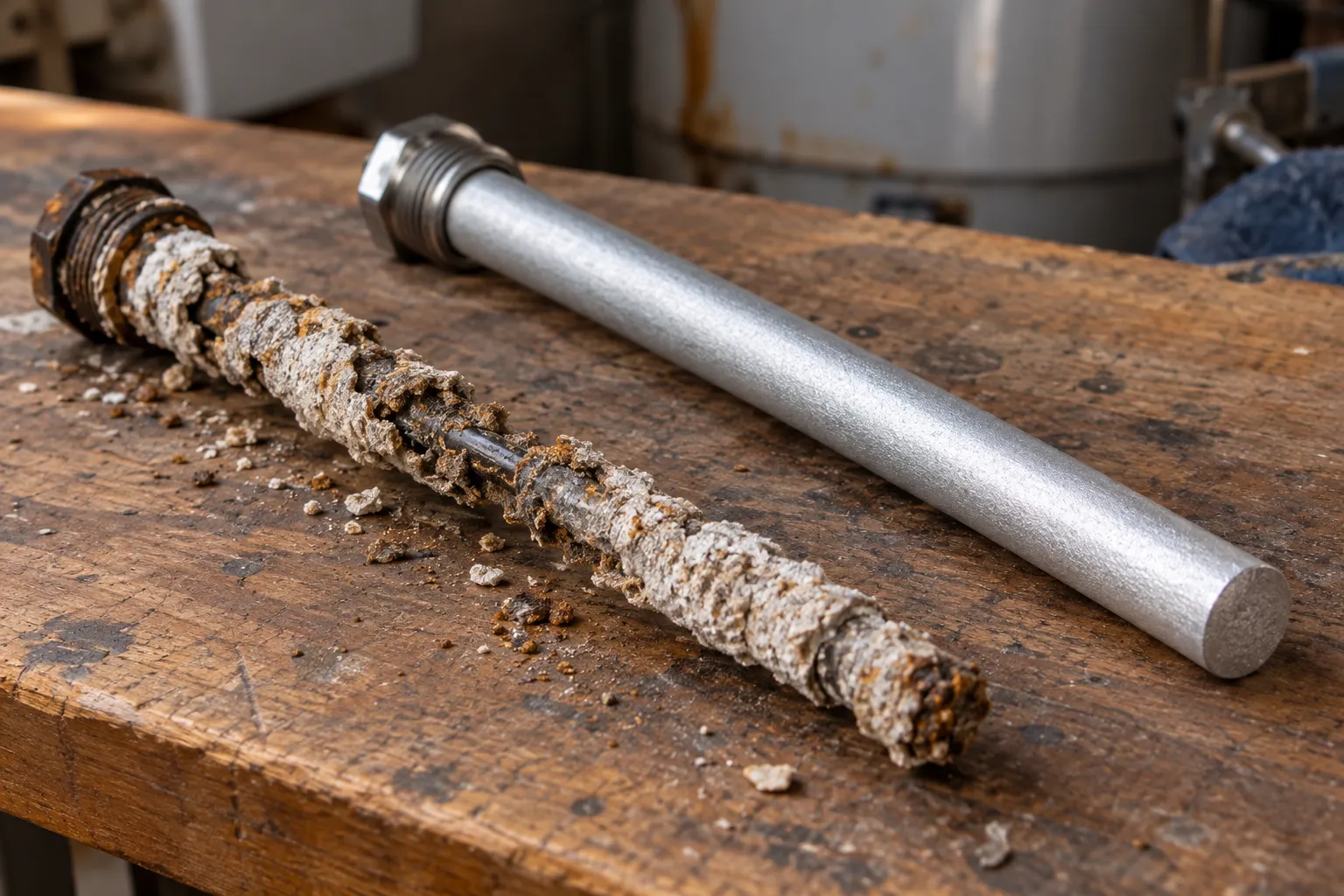
Every tank water heater has an anode rod, a metal rod that corrodes on purpose so the steel tank doesn't. Once it's used up, the tank itself starts to rust from the inside. In hard water it's worth having the anode checked every few years and replaced when it's worn. A rotten-egg smell from the hot water can also be a sign the anode needs attention.
Cut Down on Sediment
Flushing deals with sediment after it forms. A water softener reduces the minerals that cause it in the first place, which helps the water heater, fixtures and appliances last longer. Our post on Tampa Bay's water quality explains more.
Repair or Replace?
In Tampa Bay's hard water, most tank water heaters last about 8 to 12 years. It's usually time to replace yours when:
- It's over 10 years old and getting noisy
- The popping continues even after a flush
- The hot water looks rusty or discolored
- Water is leaking from the tank itself, which can't be repaired
- You're running out of hot water faster than you used to
A replacement is also a good time to decide between tank and tankless. And in Florida, replacing a water heater requires a permit, which your plumber pulls as part of the job.
Noisy Water Heater?
Believe Plumbing repairs and replaces tank and tankless water heaters, gas and electric, across Tampa Bay, including Tampa, Carrollwood, Brandon and Riverview. We'll tell you honestly whether a flush and a new anode will do it or it's time for a new heater. See our water heater services or contact us for a free estimate.
Need a Plumber in Tampa Bay?
Believe Plumbing is available 24/7 for emergencies and offers free estimates on all services.