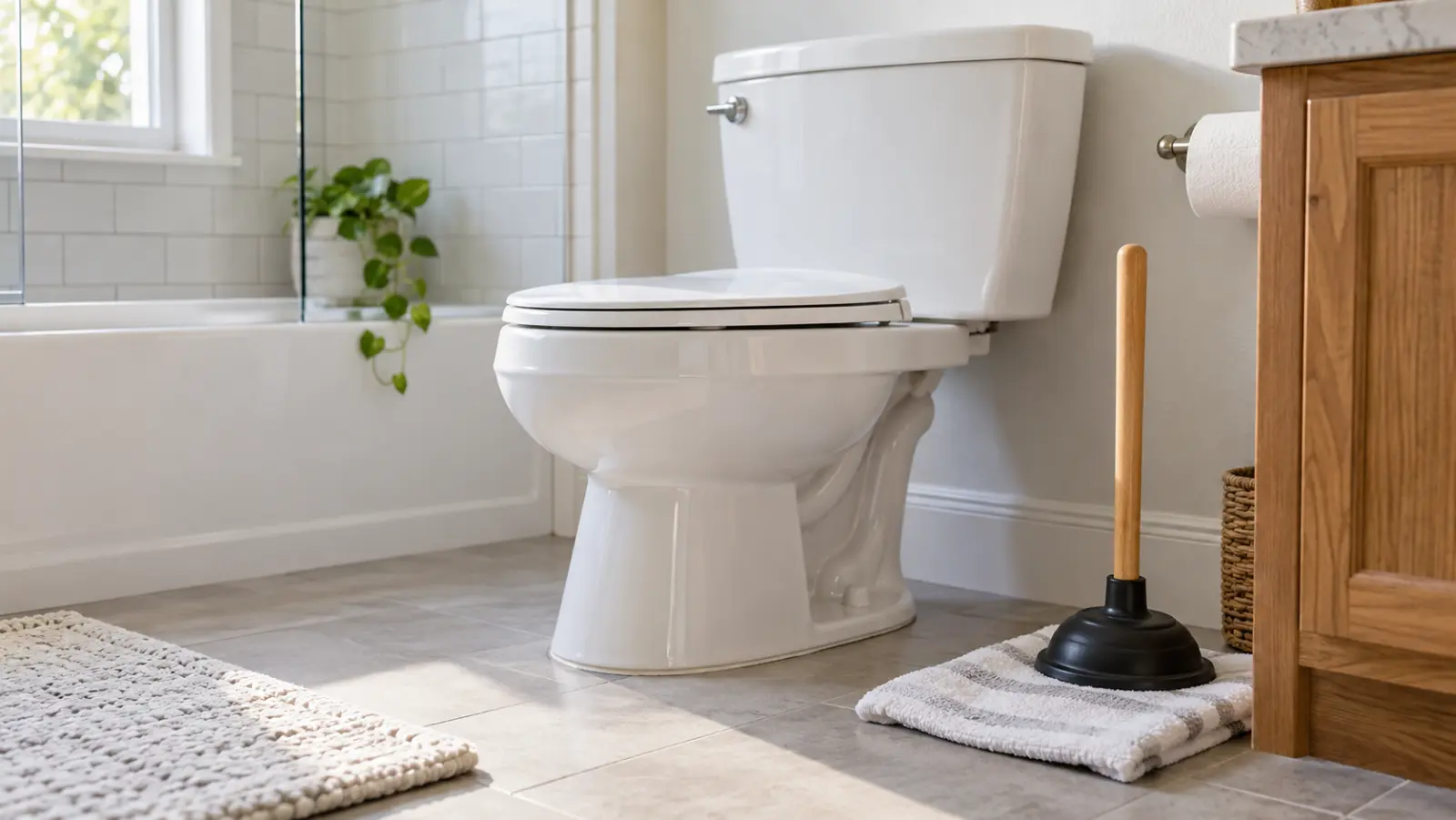
A clogged toilet is one of the most common plumbing problems, and most of the time you can clear it yourself in a few minutes. The key is not making it worse by flushing again or reaching for chemicals. Here's how to handle it.
First: Stop an Overflow
If the bowl is filling up and you're worried it'll spill over, don't flush again. Lift the tank lid and push the flapper at the bottom of the tank down to stop more water from going into the bowl. Then turn off the water at the shut-off valve on the wall behind the toilet, turning it clockwise.
If the bowl is very full, wait 10 to 15 minutes. Sometimes the water slowly drains on its own and makes plunging less messy.
Use the Right Plunger
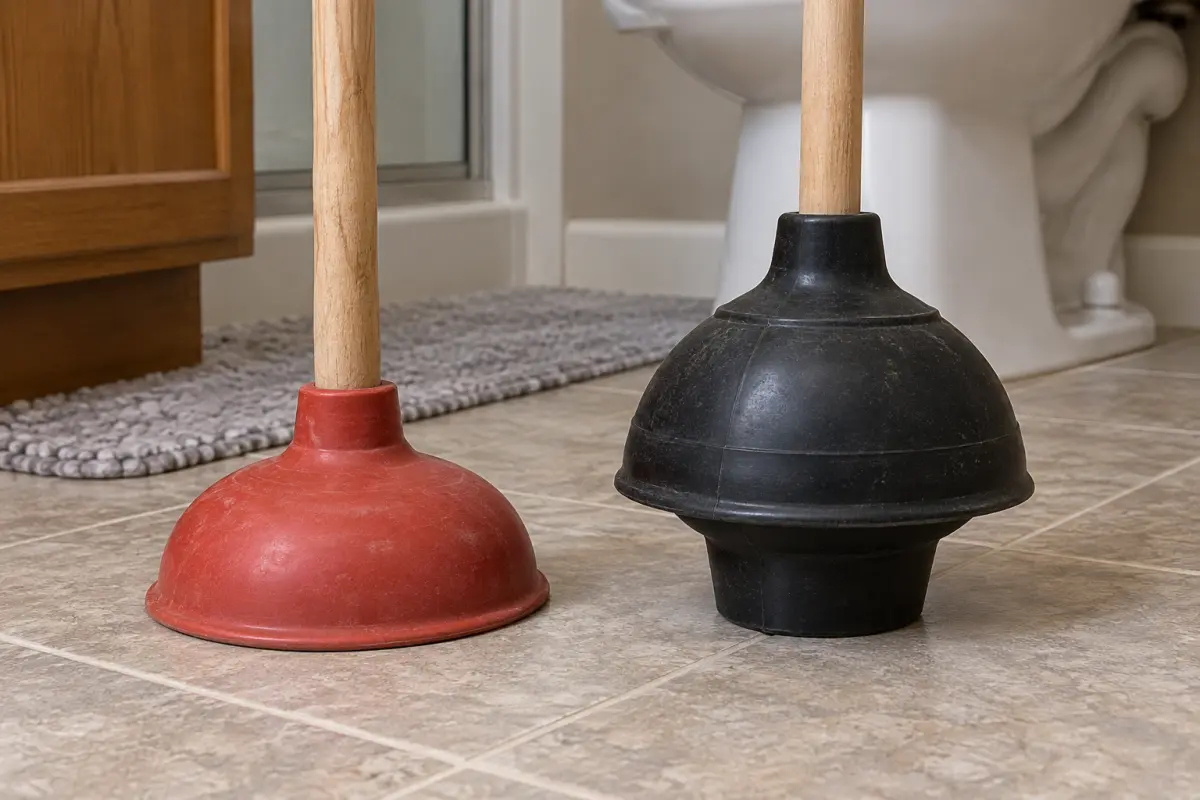
There are two common kinds of plunger. A flat cup plunger is made for sinks and tubs. A flange plunger has an extra rubber sleeve on the bottom that fits into the toilet's drain opening and seals much better. If you only own one plunger, make it a flange plunger.
How to Plunge a Toilet
- Lay old towels around the base of the toilet.
- Make sure there's enough water in the bowl to cover the plunger's cup. Add some from a bucket if needed.
- Fit the flange into the drain opening and press down gently first to push the air out.
- Push and pull firmly 10 to 15 times, keeping the seal. It's the pulling as much as the pushing that loosens a clog.
- Lift the plunger and see if the water drains. Repeat a few rounds if needed.
- Once it drains, turn the water back on and flush once to test.
If Plunging Doesn't Work: A Toilet Auger
A toilet auger, sometimes called a closet auger, is a short drain snake with a protective sleeve that won't scratch the porcelain. Put the curved end into the bowl's drain, crank the handle to feed the cable in, and work it back and forth to break up or grab the clog. They're inexpensive at a hardware store and handle clogs a plunger can't.
What Not to Do
- Don't keep flushing. Each flush adds water to a bowl that can't drain.
- Don't use chemical drain cleaners. They rarely work on toilet clogs, can damage pipes and seals, and leave caustic water in the bowl for whoever plunges next.
- Don't use a wire coat hanger. It scratches the porcelain and rarely reaches the clog.
When It's More Than a Toilet Clog
Call a plumber if:
- Other drains are backing up too, like water coming up in the tub when you flush. That points to the main sewer line, not the toilet. See tree roots and Tampa sewer lines.
- The toilet gurgles when you run the sink or washer.
- Something solid went down, like a toy, a phone or a cleaning brush. Pushing it further can lodge it in the drain line.
- It clogs often. Frequent clogs can mean a buildup in the toilet's trap, an older low-flow toilet that doesn't flush well, or a partial blockage further down.
- Water is leaking at the base. See our toilet repair post.
Preventing Toilet Clogs
- Flush only toilet paper. "Flushable" wipes don't break down like toilet paper does.
- Keep a small trash can in every bathroom, especially guest bathrooms.
- Use a reasonable amount of paper, and flush twice for big jobs if needed.
- If an older toilet clogs constantly, a modern high-efficiency toilet may flush much better. See when to replace your toilet.
Toilet Still Clogged?
Believe Plumbing clears toilet and main line clogs across Tampa Bay, including Tampa, Brandon and Clearwater. See our toilet services and drain cleaning, or contact us.
Need a Plumber in Tampa Bay?
Believe Plumbing is available 24/7 for emergencies and offers free estimates on all services.