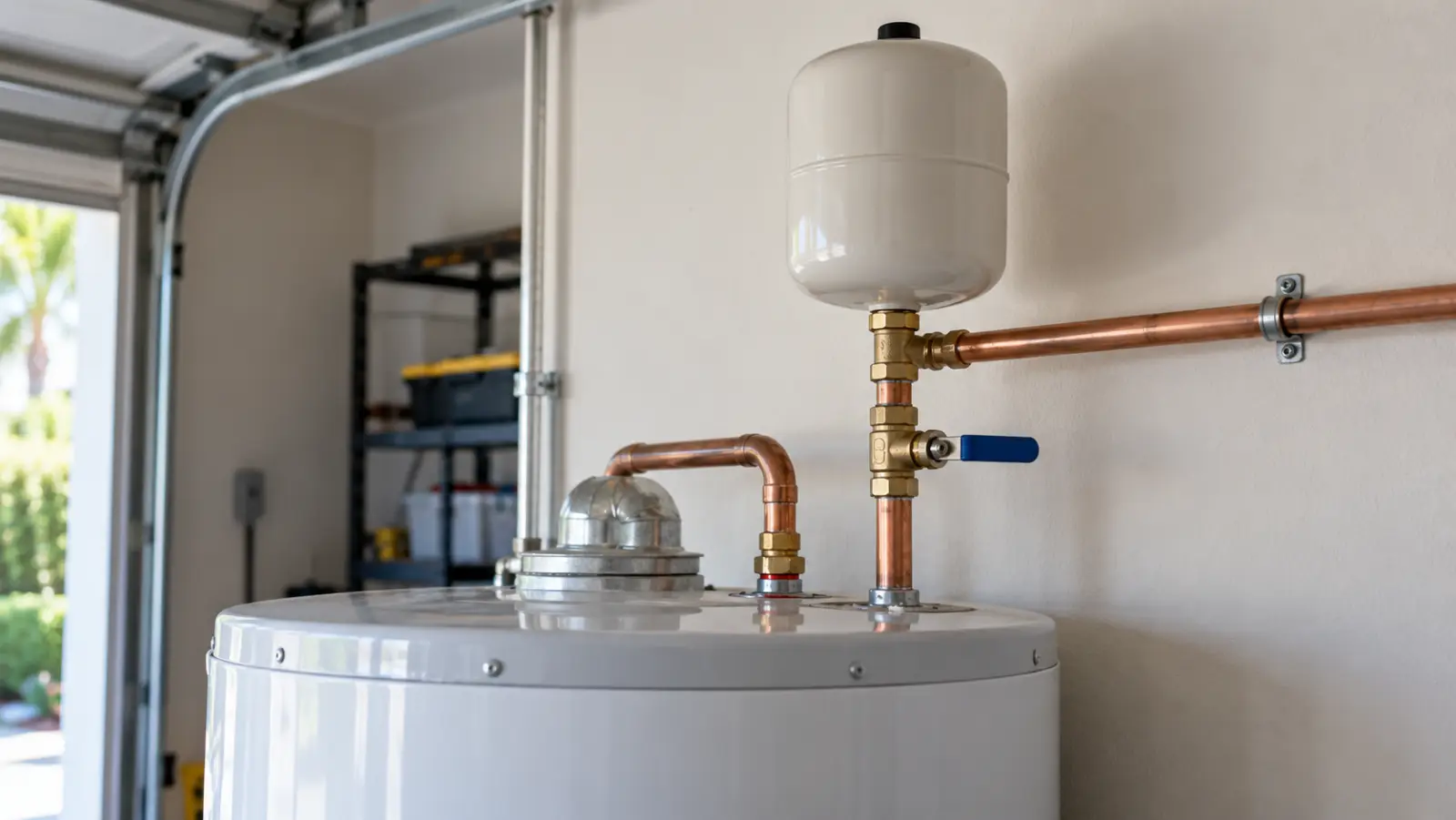
Many Tampa Bay homes have a small tank, about the size of a basketball, mounted on the pipe above the water heater. Most people never think about it. But that thermal expansion tank does an important job, and when it fails, the signs show up in other places. Here's what it does and how to tell if yours needs attention.
Why Water Heaters Need Room to Expand
Water expands when it's heated. In a 50-gallon tank, heating the water adds a noticeable amount of volume. In older plumbing, that extra water simply pushed back out toward the city main. But most homes today have a check valve, a backflow device or a pressure-reducing valve on the main line that stops water from flowing backward. That creates a closed system, and the extra water has nowhere to go. Pressure spikes every time the heater runs.
An expansion tank gives that water somewhere to go. Inside is a rubber bladder with air on one side. As the water expands, it pushes into the tank and compresses the air, keeping pressure in a safe range.
Do You Need One?
If your home has a closed system, you likely do, and code often requires one when a water heater is installed or replaced. The permit inspection for a water heater replacement checks for it. If you're not sure whether your system is closed, a plumber can tell you.
Signs Your Expansion Tank Has Failed
- The relief valve on the water heater drips or discharges, especially while it's heating
- Water pressure spikes right after the heater runs, then drops
- Faucets or toilet fill valves wear out faster than they should
- Banging pipes when fixtures shut off. See water hammer.
Two Quick Checks
The tap test. Tap the tank with your knuckle. The top half should sound hollow, because it holds air. If the whole tank sounds solid, it's full of water and the bladder has likely failed.
The valve test. Most expansion tanks have a small air valve, like a tire valve, on the end. Briefly press the pin. Air should come out. If water comes out, the bladder has failed and the tank needs replacing.
Replacement and Setup
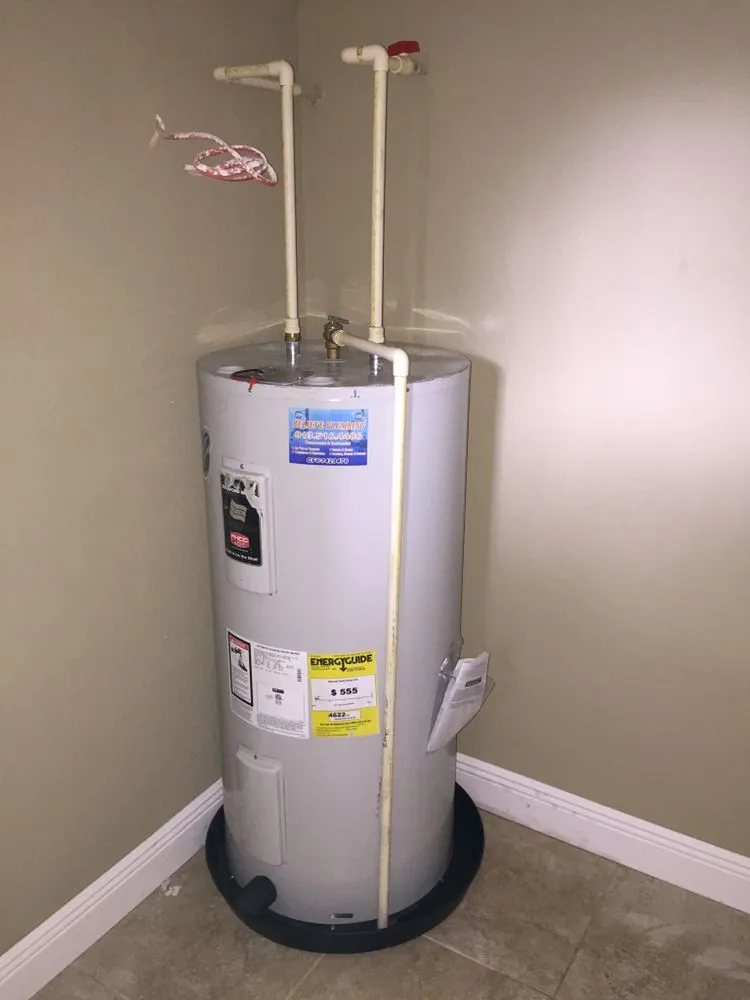
Expansion tanks usually last somewhere around 5 to 10 years. Replacement is a straightforward job. The important part is setup: the tank's air charge should be set to match your home's water pressure before it's installed, and the tank should be properly supported. A tank that's set wrong won't do its job.
If you're replacing your water heater, it's a good time to replace an older expansion tank too. See sizing a water heater and water heater permits.
Expansion Tank Help
Believe Plumbing installs and replaces expansion tanks and water heaters across Tampa Bay. If your relief valve is dripping, see water heater leaking, check our water heater services, or contact us.
Need a Plumber in Tampa Bay?
Believe Plumbing is available 24/7 for emergencies and offers free estimates on all services.