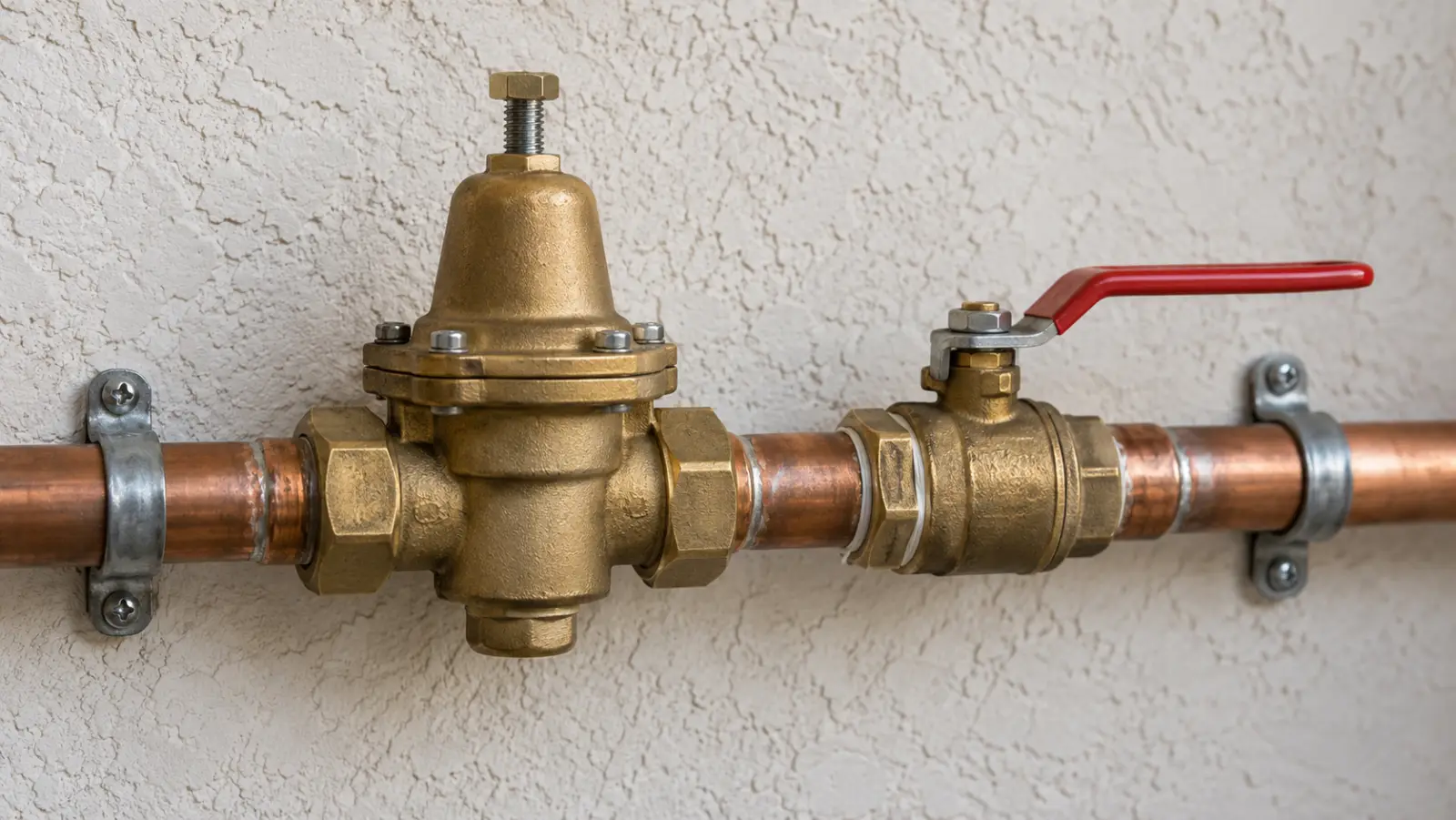
Water can arrive from the city at higher pressure than a home's plumbing should handle. Many homes have a pressure-reducing valve, or PRV, where the main line enters the house to bring that pressure down to a safe level. Like any valve, it wears out. When it does, the effects show up all over the house.
What a PRV Does
A PRV is usually a bell-shaped brass valve on the main water line, near where it enters the house or near the main shut-off. Inside is a spring and diaphragm that reduce incoming pressure to a set level, typically somewhere around 50 to 60 psi for a home. An adjusting screw on top sets the pressure.
Signs It's Failing
- High pressure: strong, splashing flow, banging pipes, and toilets that run or hiss
- Low pressure throughout the house, if the valve fails partly closed
- Pressure that fluctuates from strong to weak
- The water heater's relief valve dripping
- Humming or vibration from the valve or pipes
- Faucets, fill valves and appliance hoses failing more often than they should
Test Your Pressure
Buy a water pressure gauge that screws onto a hose spigot. They cost about $10 at a hardware store. With no water running in the house, screw it on and open the spigot fully.
- 40 to 80 psi is the normal range for a home. Many plumbers aim for 50 to 60.
- Above 80 psi is too high. It strains pipes, fittings, water heaters and appliances.
- Below 40 psi feels weak. See low water pressure causes.
Leave the gauge on overnight if it has a second, "lazy" needle that records the highest reading. A high overnight reading can point to a failing PRV or thermal expansion. See thermal expansion tanks.
Why High Pressure Matters
High water pressure doesn't usually cause a dramatic failure on its own. It wears everything out faster: faucet cartridges, toilet fill valves, washing machine hoses, ice maker lines and water heater relief valves. Over time, it's a common reason supply hoses burst. See burst pipes.
Adjust or Replace?
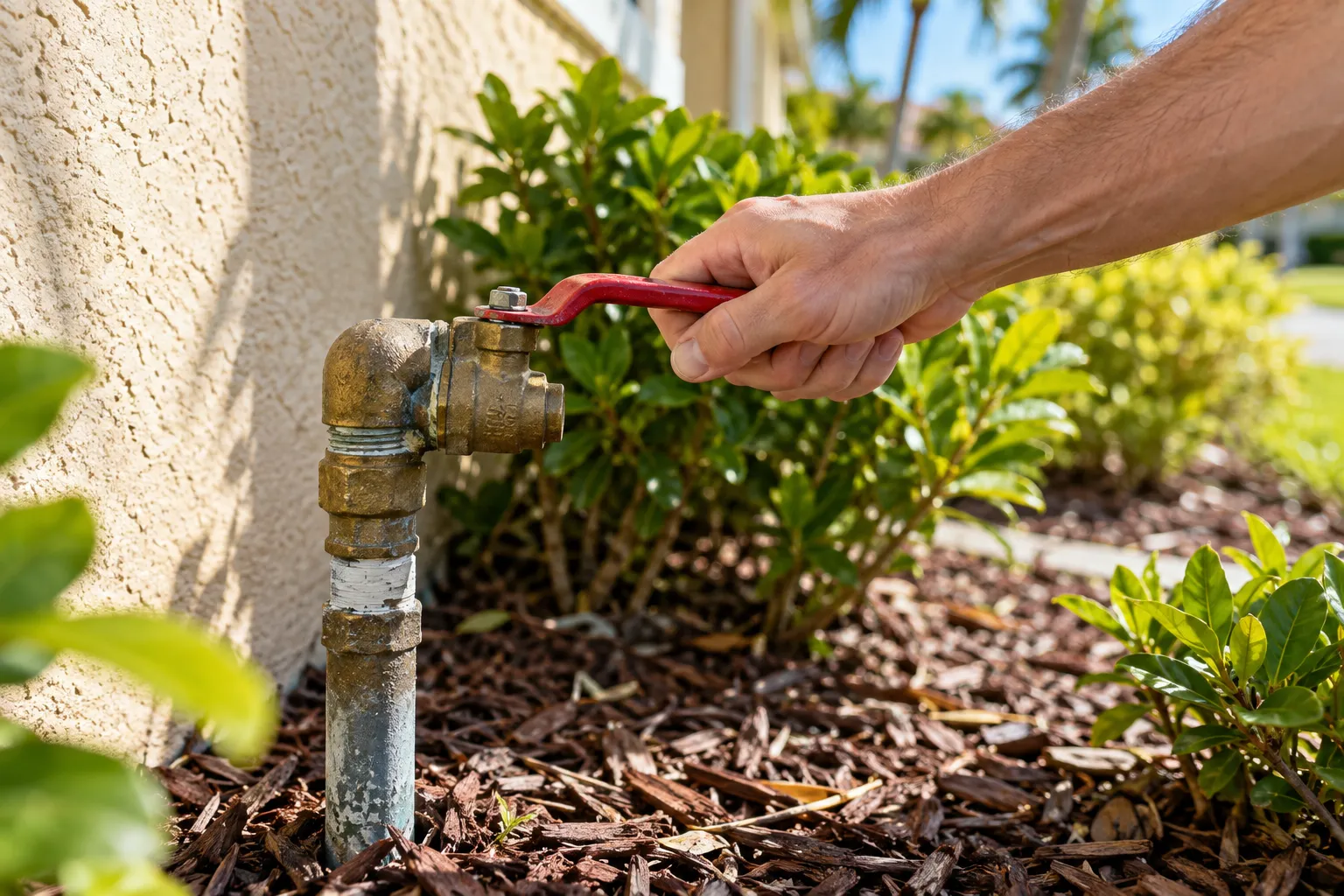
If the valve is in good shape, it may only need adjusting. But PRVs often last somewhere around 10 to 15 years, and a valve that won't hold its setting, or has failed partly closed, needs replacing. Replacement involves shutting off the water, cutting out the old valve, installing the new one and setting the pressure. When a PRV is replaced, the plumber should also check whether your home needs an expansion tank.
Pressure Problems?
Believe Plumbing tests water pressure and replaces pressure-reducing valves across Tampa Bay. See our pipe repair and installation services or contact us for a free estimate.
Need a Plumber in Tampa Bay?
Believe Plumbing is available 24/7 for emergencies and offers free estimates on all services.