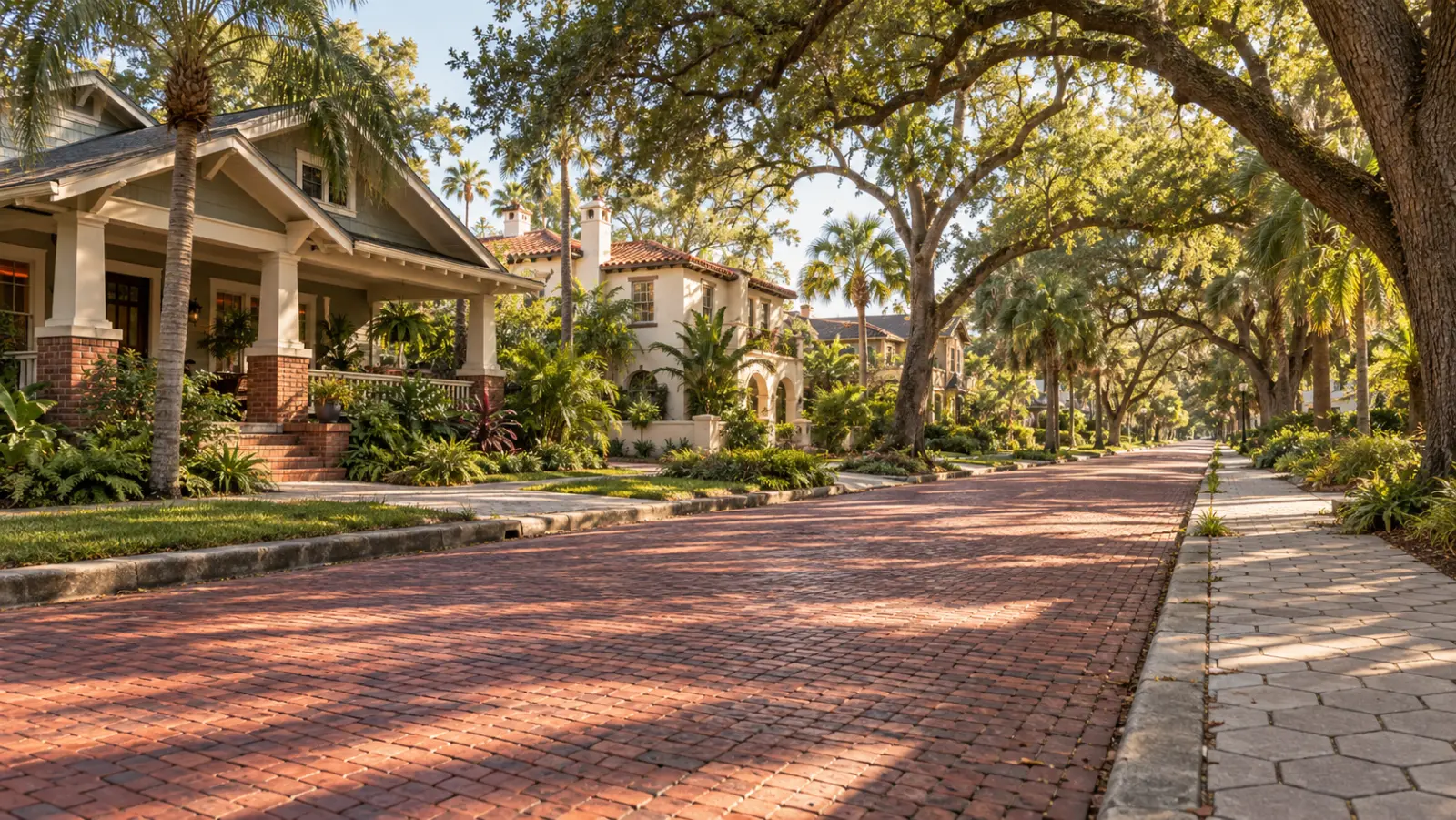
St. Petersburg has some of the oldest and most charming homes in Tampa Bay. It also has some of the oldest plumbing. We come over from our West Tampa shop on the Howard Frankland or the Gandy Bridge to work in St. Pete regularly, and the same handful of issues come up again and again. Here's what St. Pete homeowners should know.
Older Homes, Older Pipes
Much of St. Pete's housing dates from the 1920s through the 1950s, especially in the Old Northeast, Historic Kenwood and Crescent Lake. Many of these homes still run on:
- Cast-iron or clay drain and sewer lines that are 70 to 100 years old
- Galvanized steel or early copper supply pipe
- Mixed materials from decades of partial updates, where new pipe meets old
Neighborhoods with mid-century homes, like Disston Heights, Euclid-St. Paul and Lakewood Estates, often have the same cast-iron drains and galvanized or early copper supply lines.
1. Aging Drain and Sewer Lines
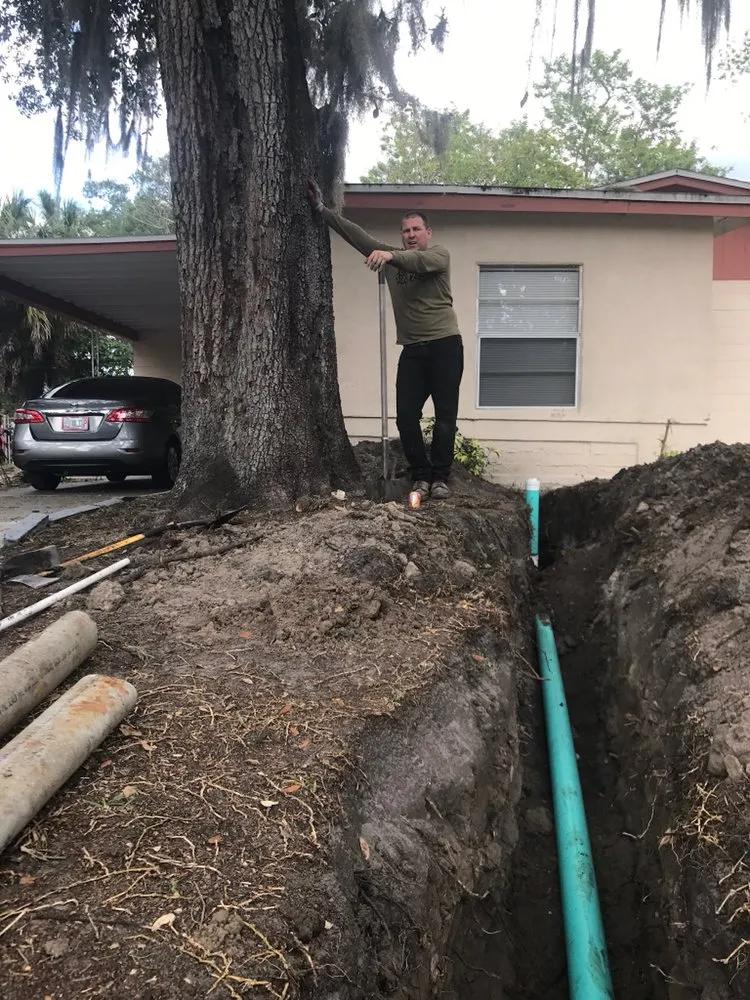
Old cast-iron drains corrode and crack, and clay sewer lines have joints every few feet where roots get in. St. Pete's big oaks make roots a common problem. When several fixtures drain slowly at once, or the tub backs up when you flush, the main line is usually the cause.
A camera inspection shows whether it's roots, a crack, a sag or corrosion, so the repair fixes the actual problem. See cast-iron drain pipes and tree roots in sewer lines.
2. Galvanized and Old Copper Pipe
Galvanized pipe rusts from the inside, so pressure drops and the water may run rusty when you first turn it on. Old copper develops pinhole leaks. If you're dealing with low pressure, rusty water or repeated leaks, the supply pipe is likely at the end of its life. See low water pressure causes. A repipe with PEX or copper fixes it for good, and it's often required or encouraged by insurers for older homes.
3. Flooding
Low-lying neighborhoods near the water, like Shore Acres and Snell Isle, deal with flooding from storms and high tides. Flooding is hard on water heaters, anything plumbed at ground level, and sewer systems. A water heater that's been underwater shouldn't be switched back on until it's checked. See plumbing after a hurricane or flood.
4. Hard Water
Pinellas County's water is hard, and mineral scale shortens the life of water heaters, faucets and toilet parts. Flushing your water heater once a year, and a water softener or filter, help protect new fixtures. See why your water heater is popping.
Renovating an Older St. Pete Home?
Restoring a bungalow or updating a kitchen or bathroom is the best time to replace old pipe, while the walls and floors are already open. See bathroom remodel plumbing for what to plan. And if you're buying, get a sewer camera inspection before closing.
Permits in St. Petersburg
Plumbing permits inside St. Petersburg city limits go through the City of St. Petersburg. Water heater replacements and repipes typically need one. When a job needs a permit, we pull it as part of the job.
Plumbing Help in St. Pete
Believe Plumbing serves St. Petersburg, from Downtown and the Old Northeast to Kenwood, Crescent Lake, Shore Acres, Disston Heights and Lakewood Estates. We're licensed (CFC1429476), and estimates are free. See our St. Petersburg plumbing page, including sewer line repair, repiping and water heaters, or contact us.
Need a Plumber in Tampa Bay?
Believe Plumbing is available 24/7 for emergencies and offers free estimates on all services.